Industry
Part of Twelve kinds of home energy contractor, and who does what: the 2027 view
Reading home energy contractors with a sceptical eye, updated for 2027
What goes right and wrong in the contractor relationship: the recurring themes in how households describe working with home energy contractors, communication.
We have not surveyed homeowners and are not going to pretend we have. What this article offers instead is a description of the recurring structural patterns in contractor relationships, drawn from how residential work is organized rather than from testimonials. The pattern that stands out is that satisfaction tracks communication far more closely than it tracks workmanship.
What to take away
- Communication cadence predicts satisfaction better than price or brand.
- Closeout is the phase most often abandoned by both sides.
- Emergency work is a different market with different behavior.
- Complaints about workmanship are frequently complaints about expectations.
Communication is the variable
Residential contracting is a scheduling business. Crews move between jobs, suppliers slip, inspections are booked around other people's calendars. None of that is unusual, and almost none of it is communicated proactively unless a company has decided to. A written schedule with milestones keeps crews and homeowners on the same page when delays hit.
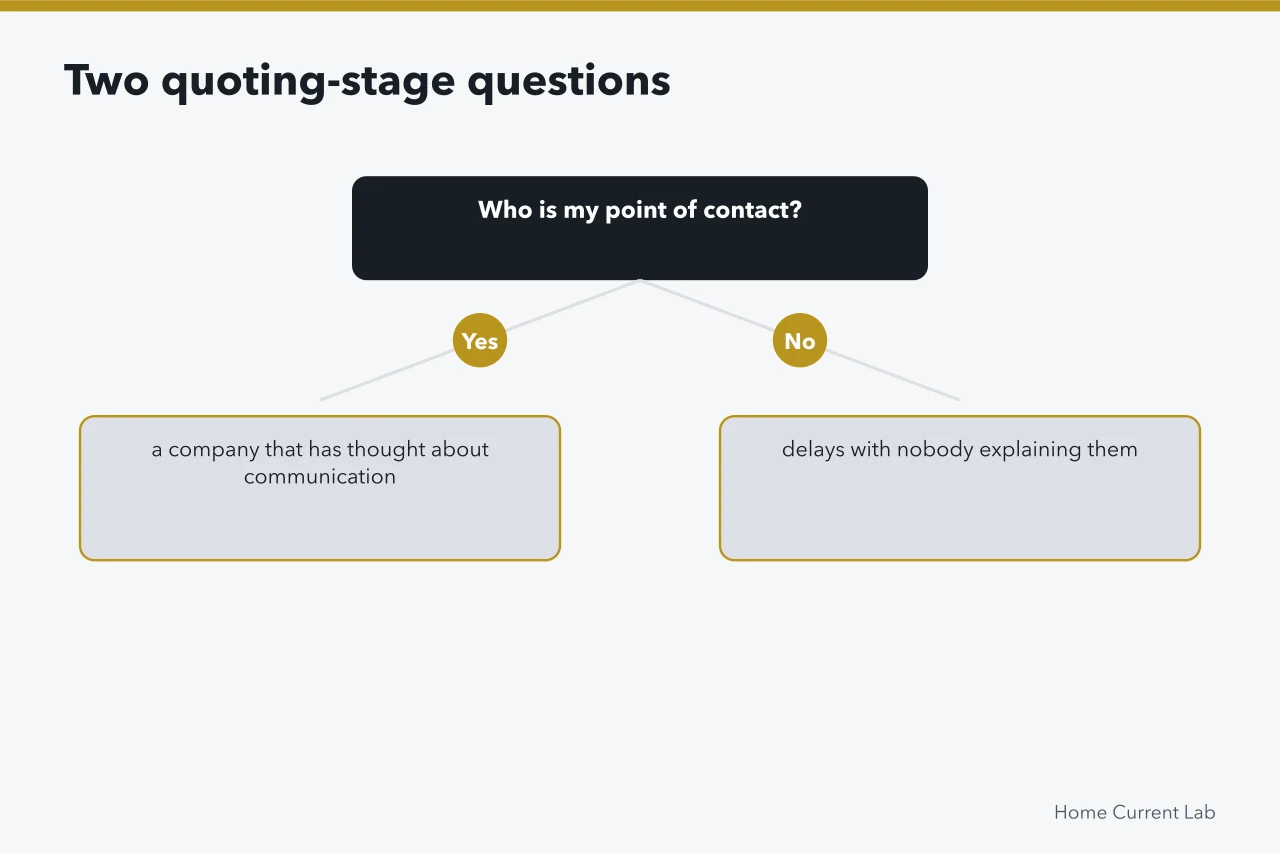
The households that describe projects as going well are usually describing a company that said what was happening before being asked. The households describing disasters are frequently describing the same delays with nobody explaining them.
Two questions at the quoting stage predict most of this: who is my point of contact, and how often will I hear from them? A company with an answer has thought about it.
Closeout is where relationships end badly
The last five percent of a job is the part with no money left in it. Commissioning documents, the permit sign-off, the small repair to the drywall, the manual left in a drawer. All of it is easy to defer and easy to forget.
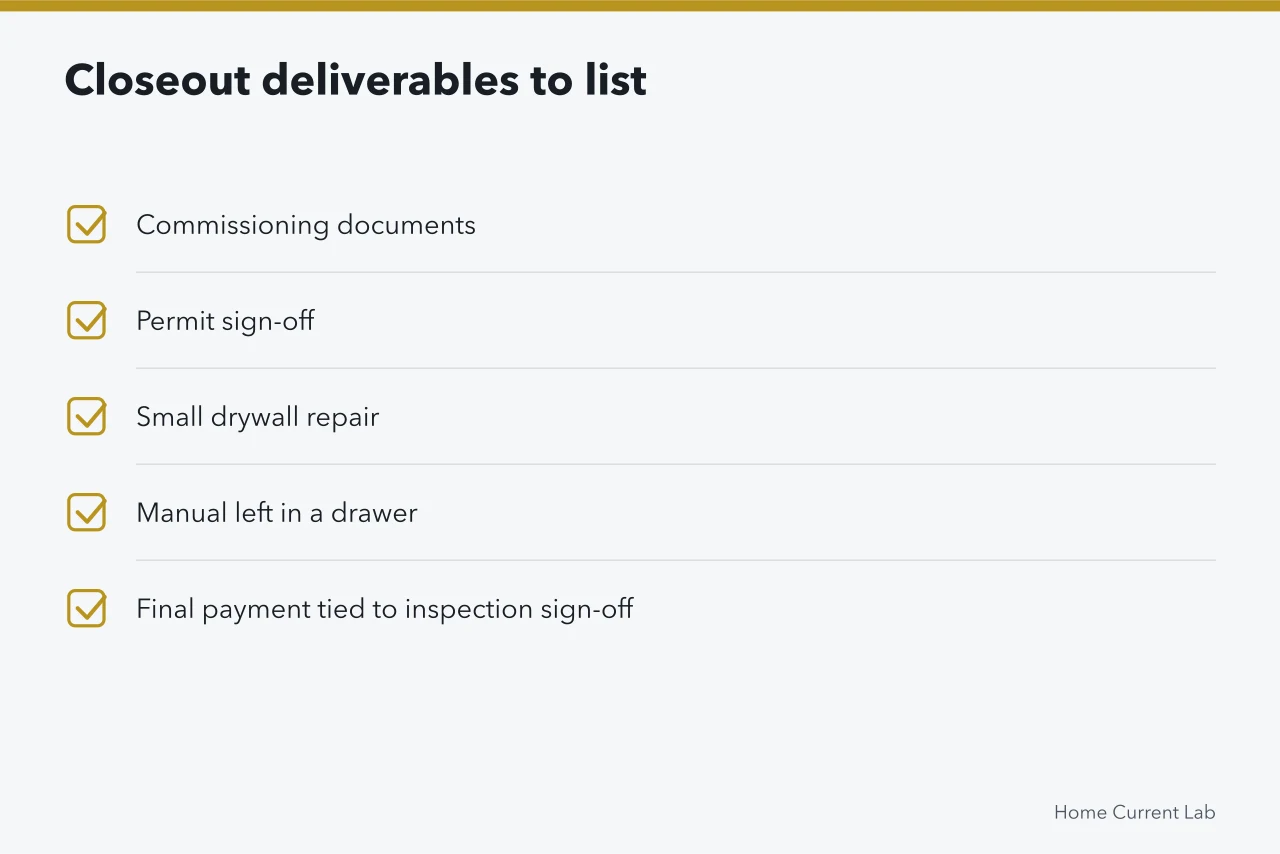
Tying final payment to inspection sign-off changes this more than any conversation. So does asking, at the quoting stage, for the closeout deliverables to be listed as line items. Listing closeout items as line items works best when the bid itself is scored against a written checklist.
Emergency work is a different market
After a major weather event, the local contractor market changes shape entirely. Demand spikes, established firms are booked, and unfamiliar companies appear.
EIA reporting that hurricanes in 2024 led to the most hours without power in the United States in a decade describes conditions that produce a scramble for contractors.
The same pressure appears on the generation side. EIA's explanation of how reserve generating capacity keeps the lights on covers the margin the system holds for demand peaks and outages.
The homeowner lesson is narrow: decisions made during a scramble are the worst decisions available, and the verification checks that matter most are exactly the ones nobody performs in an emergency.
Expectation failures that look like workmanship failures
| Complaint | Often actually |
|---|---|
| The system does not heat properly | Backup lockout settings, or a duct problem |
| It is noisier than expected | Placement, and a sound figure nobody discussed |
| The bill did not fall | An expectation set by a modeled figure |
| They left a mess | Scope that never included repair |
| Nobody explained the controls | A handover that was never in the quote |
Every row is preventable at the quoting stage by writing the expectation down. For what households notice about the equipment rather than the relationship, see our piece on the adjustments after a heat pump goes in; the contractor roles are mapped in twelve kinds of contractor.
Common questions
Should I choose a large firm or a small one? Neither is reliably better. Ask about communication cadence, coordination and who services the equipment afterwards.
What if the contractor stops responding after payment? This is why final payment is tied to inspection sign-off. Before that point you have a lever; afterwards you have a complaint.
Are online reviews useful here? For communication and scheduling behavior, yes. For equipment performance, much less so.
How do I avoid hiring badly after a storm? Do the license and insurance checks anyway, however urgent it feels, and be wary of unsolicited door-to-door offers.