Reviews
Part of Twelve kinds of home energy contractor, and who does what: the 2027 view
Home energy contractor options: the 2027 review
Renters and small-job households hire from a different contractor market, so here are the trades that take small work and what each one handles.
Most home energy contractor advice assumes an owner with a large job. Renters and small-space households hire from a different market: call-out minimums that swallow a small task, licensed trades who skip an hour of work, and a landlord who owns the decision anyway.
This 2027 review of home energy contractor options names the companies that do take small work, what each one handles and what it typically costs.
What to take away
- A licensed trade bills a minimum for the visit, so four small tasks cost less as one booking than as four. In most US markets that minimum runs about $100 to $200 as of 2027.
- Handyman services in most states and provinces cap out below electrical, gas and refrigerant work, so those tasks need a licensed trade.
- Renters own portable equipment and the landlord owns anything fixed to the building, including heating.
- Retailers such as Home Depot and Lowe's sell installation as a package, which suits a single appliance swap.
- Utility programs such as BC Hydro and Efficiency Nova Scotia route work through approved contractor networks.
- Franchise trades quote flat rates before work starts: Mister Sparky, Mr. Electric, One Hour Heating & Air Conditioning, Aire Serv and Mr. Handyman.
- Branded heat pump and furnace work goes through the maker's dealer network: Mitsubishi Electric Diamond Contractors, Daikin Comfort Pro, Carrier Factory Authorized Dealers and Trane Comfort Specialists.
- Marketplaces such as Angi, Thumbtack and TaskRabbit fit one-off tasks that no licensed trade will book as a small job.
The minimum call-out problem
A licensed trade travelling to your home has a floor price regardless of how long the work takes. For a fifteen-minute task, that floor is the price. This is why small jobs feel disproportionately expensive, and why many households let several pile up before booking anything.
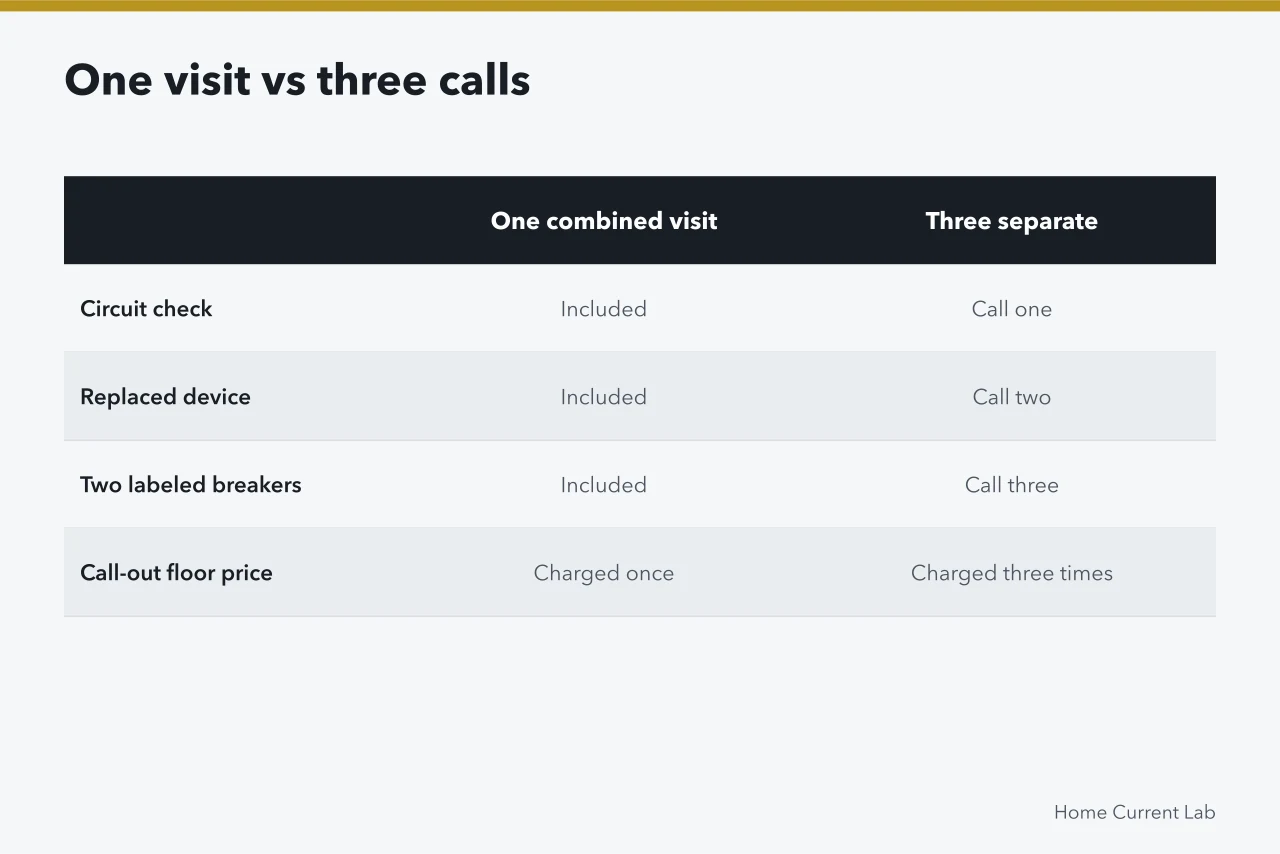
Keep a list. When you have four small tasks for the same trade, book one visit. One electrician visit that checks a circuit, replaces a device and labels two breakers costs far less than three separate calls. At a $120 call-out floor, three visits start at $360 before any labor.
The trades that take small work, by company
Handyman services. Task-based businesses bill hourly or by the job, often with a two-hour minimum. Mr. Handyman and Handyman Connection quote a fixed price for a list of small repairs. In most US markets handyman labor runs about $75 to $150 an hour as of 2027.
Most states bar handyman firms from electrical, gas and refrigerant work. Keep them to carpentry, caulking and hardware.
Small-job electricians. Many residential electrical firms reserve part of the week for service calls rather than panel upgrades. Ask for the service department, not the estimating line. Mister Sparky and Mr. Electric are franchise networks built on that work, with flat-rate pricing and published on-time guarantees.
They handle a dead outlet, a tripping breaker, a bathroom fan and a thermostat circuit. A diagnostic visit typically runs $70 to $150 in most markets as of 2027.
Appliance and HVAC service companies. Manufacturer-authorized agents handle warranty repairs on heat pumps, water heaters and ranges. Carrier Factory Authorized Dealers, Trane Comfort Specialists, Mitsubishi Electric Diamond Contractors and Daikin Comfort Pro dealers have met factory training requirements, so a branded failure goes back to them.
One Hour Heating & Air Conditioning and Aire Serv are franchise networks that take non-warranty service calls, with diagnostic visits typically $75 to $150. For a renter, this matters: a landlord's failed appliance is usually fixed through the brand's own service network, not a general contractor.
Retail installation programs. Home Depot and Lowe's sell installation with the appliance. The price is bundled and the scheduling is simple, which suits a single swap. Home Depot offers haul-away of the old unit with delivery, and Lowe's adds installation at checkout through independent licensed installers.
A basic appliance hookup typically runs $100 to $250 as of 2027, and the trade-off is that you take the installer they assign.
Utility-approved contractor networks. BC Hydro, FortisBC, Hydro-Québec, Efficiency Nova Scotia and the Home Performance with ENERGY STAR programs each publish lists of contractors approved for their rebates. BC Hydro rebates require a licensed contractor, FortisBC requires a licensed gas contractor, and Hydro-Québec's LogisVert program requires an RBQ license.
A contractor on one of those lists has met the program's credential requirements, which shortens your own vetting.
Specialist auditors. An EnerGuide evaluation is a separate trade from installation. Natural Resources Canada licenses the energy advisors who carry it out, and rebate programs ask for their report by name. The auditor produces the rating; a different contractor does the work. Keep the two roles apart when you compare quotes.
Property management maintenance. In a managed building, the maintenance line is the first call for anything fixed. Large operators such as Greystar, Lincoln Property Company and AvalonBay Communities run on-site teams that hold the building's licensed trades and the landlord's authority to dispatch them. A tenant request usually goes through the office, not a contractor search.
Who does what in a rental
| Task | Usually the renter | Usually the landlord |
|---|---|---|
| Portable and plug-in equipment | Yes | No |
| Replacing bulbs and filters | Yes | Sometimes supplies them |
| Anything fixed to the building | No | Yes |
| Heating and cooling system service | No | Yes |
| Electrical faults and panel work | No | Yes |
| Window and door replacement | No | Yes |
The dividing line is generally whether the item is part of the building. Fixed equipment, the electrical system and the systems serving the unit are the landlord's responsibility, and in most jurisdictions habitability rules put heating specifically on that side.
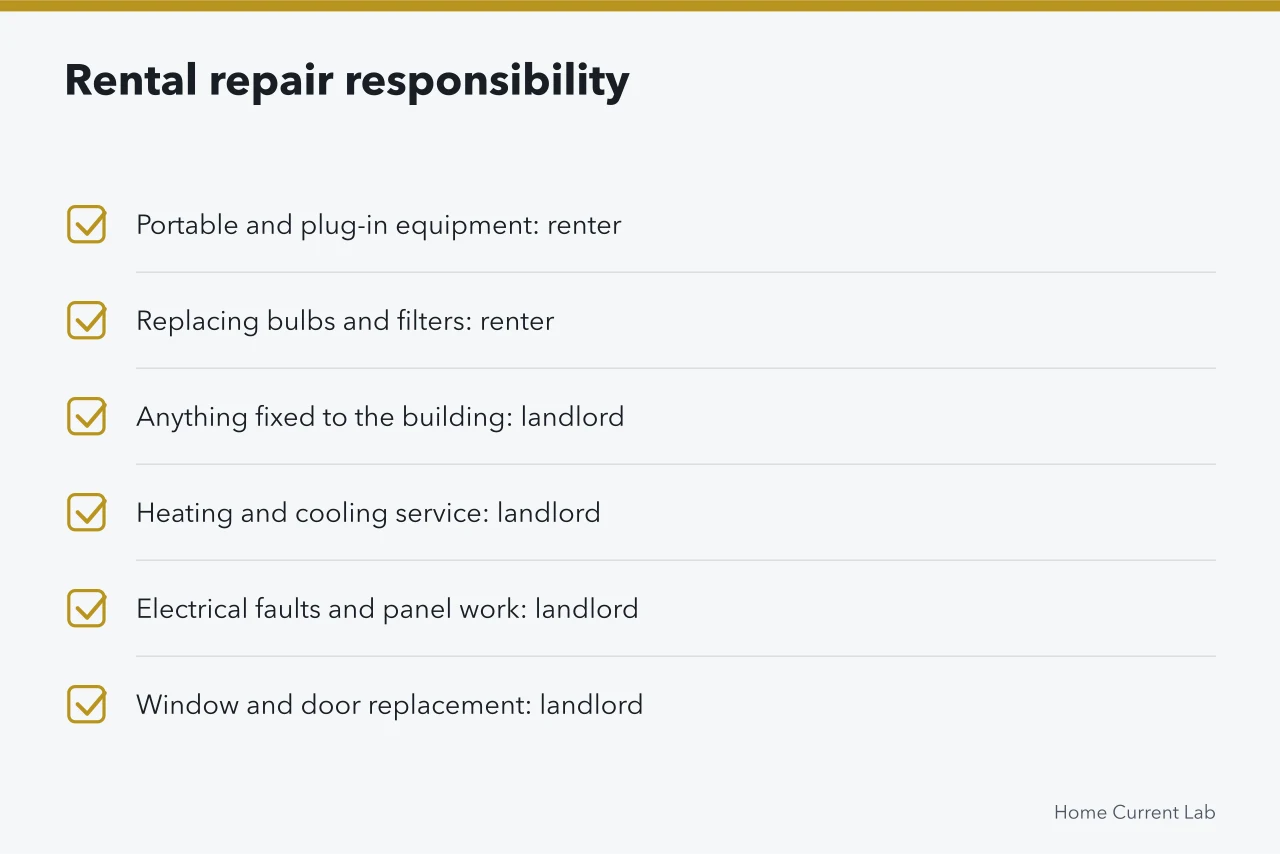
Ask in writing rather than assuming. Repair timelines and heating obligations vary by state and city, and your local housing office is the authority.
What a renter can actually change
Lighting is the clearest case. It is reversible, needs no contractor, and the efficiency gap between old and current technology is large. The Department of Energy's solid-state lighting program is the federal research effort behind that category.
Beyond lighting: portable heat pumps and air conditioners, smart plugs and monitoring on individual circuits, draft excluders and removable window film, and a portable induction hob. All of them travel to the next home.
For the odd task that needs hands, Angi and Thumbtack let you request quotes at no cost, and TaskRabbit books assembly and small repairs at typically $25 to $75 an hour plus its service fee.
Knowing what kind of building you are in
Advice differs sharply between a single-family rental, a small multifamily building and a large apartment block, because the systems are different. EIA's Residential Energy Consumption Survey data tables break results out by housing unit type, which shows that apartments in large buildings are a different housing category rather than smaller houses.
In a large building with central systems, individual unit work runs into shared plant almost immediately, and the building's own contractor is often the only party permitted to touch it. For the equipment side of the same constraint, see our piece on heat pump options for renters; the contractor roles are mapped in twelve kinds of contractor.
Common questions
Can I hire my own contractor as a renter?
For anything fixed to the building, generally not without written landlord consent. Portable equipment is yours. Put the request in writing and keep the reply.
My landlord will not fix the heating. What now?
Habitability rules usually cover heating. Contact your local housing office for the process where you live. A lawyer can tell you what remedy your province or state allows.
How do I avoid minimum call-out charges?
Batch small tasks for the same trade into one visit, and ask about the minimum before booking. One visit with four tasks beats four visits with one task each.
Is it worth paying for improvements in a rental?
Only for things you can take with you, unless the landlord agrees to contribute in writing. Portable equipment moves with you; a fixed upgrade stays behind.
Which contractor option is cheapest for a small job?
Marketplaces and handyman firms, if the task is not electrical, gas or refrigerant work. A handyman visit at $75 to $150 an hour with a two-hour minimum usually beats a licensed trade's call-out floor for hanging, sealing and swapping.
Do franchise trades charge more than a local firm?
Flat-rate pricing fixes the quote before work starts, which removes surprise but rarely undercuts an independent. Compare a franchise quote with a local firm's hourly rate plus its minimum call-out.