Maintenance
Part of How to read an all-electric home case study properly
Once a house goes fully electric, the maintenance routine changes
A combined maintenance picture for a house with no combustion equipment: what disappears from the schedule, what replaces it, and what the envelope still needs.
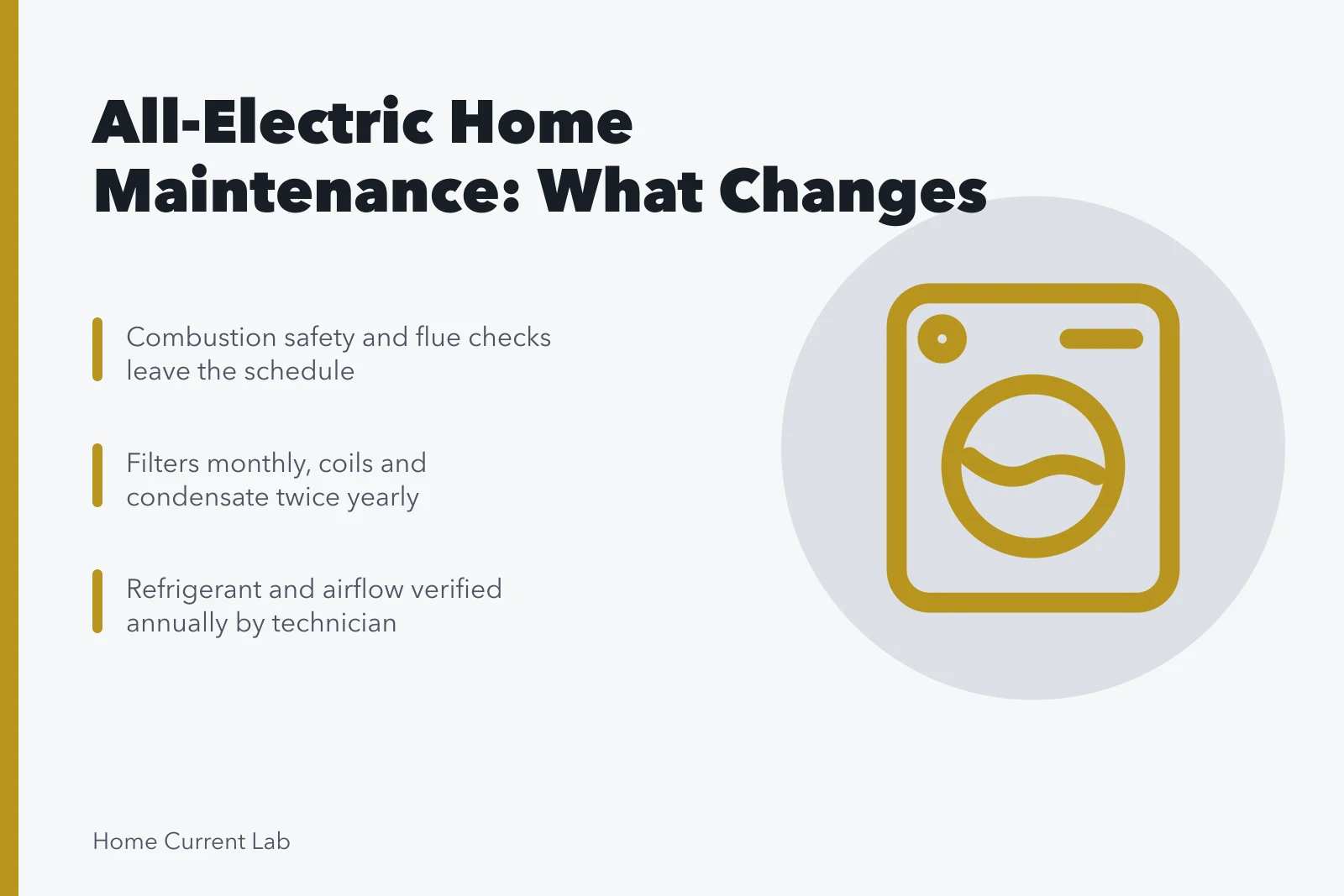
Removing combustion from a house removes a whole category of maintenance and adds a smaller one. Flue inspections, gas leak checks and combustion safety testing all disappear. What replaces them is a set of quieter, more distributed tasks, none of which announce themselves the way a pilot light going out does.
What to take away
- Combustion safety checks disappear; refrigerant and airflow checks replace them.
- The envelope becomes more important, not less, once heating is electric.
- Nothing in an all-electric house smells wrong when it fails.
- Keep one calendar for the whole house rather than one per appliance.
What leaves the schedule
- Annual combustion safety and flue inspection.
- Gas leak checks and appliance connection inspections.
- Chimney or vent maintenance, once the flue is genuinely abandoned.
- Carbon monoxide risk from household appliances, though attached garages remain a reason to keep detectors.
That is a real reduction in both cost and risk. It is also the reason all-electric houses can drift: the annual visit that used to be non-negotiable for safety reasons becomes discretionary, and discretionary visits get skipped.
What replaces it
| Task | Rhythm | Who |
|---|---|---|
| Filters across all air-moving equipment | Monthly checks in season | Homeowner |
| Outdoor unit clearance and coil rinse | Twice a year | Homeowner |
| Condensate paths, every unit that produces water | Twice a year | Homeowner |
| Refrigerant and airflow verification | Annually | Licensed technician |
| Water heater valve test and anode check | Annually | Plumber or homeowner |
| Panel and connection inspection | Every few years | Licensed electrician |
| Control settings review | Twice a year, at changeovers | Homeowner |
The pattern is more small tasks and fewer critical ones. A single household calendar works better than per-appliance reminders, because the seasonal changeovers are natural anchor points for most of it.
All-Electric Maintenance Calendar
- Filtersmonthly checks in season
- Outdoor unit clearance and coil rinsetwice a year
- Condensate pathstwice a year
- Refrigerant and airflowannually, technician
- Water heater valve and anodeannually
- Panel and connection inspectionevery few years
- Control settings reviewtwice a year
One additional habit is worth adding once the house is fully electric: a monthly walk past every outdoor unit, every drain and every panel, looking rather than doing. Five minutes finds a blocked drain, a shrub that has grown into a coil and a breaker that has tripped in a part of the house nobody uses.
The envelope matters more now
Once heating is electric, the building fabric determines a larger share of what you pay, because there is no cheap fuel absorbing the difference. Insulation settles, air seals fail, and penetrations accumulate as work is done over the years.
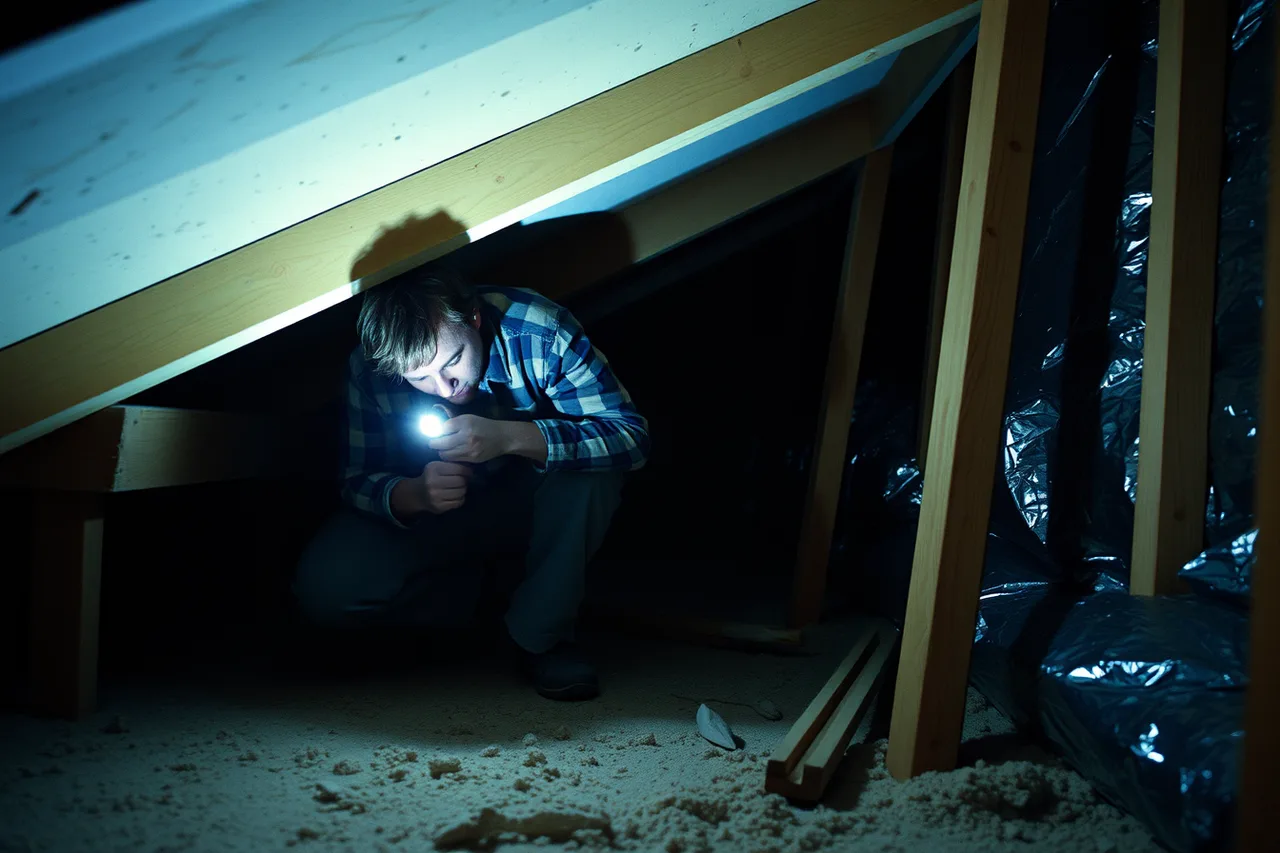
The federal research area covering that fabric, the Department of Energy's work on the opaque envelope, addresses walls, roofs and floors as a performance system rather than a set of materials. For a household, the practical version is an annual walk of the attic and the rim joist with a torch, looking for compressed insulation, daylight and rodent damage.
Reading the bill as a maintenance signal
Bills move for reasons other than your equipment. EIA's seasonal reporting, including the summer in which it expected typical residential electricity bills to be slightly higher, is a reminder that a rise can be entirely external.
Use energy per degree day, not dollars, as your maintenance signal. A worsening ratio across a season warrants a service call.
A higher bill on a stable ratio is a price story, not a fault.
The habits that quietly damage equipment are cataloged in our piece on maintenance mistakes, and the wider evidence question in reading a case study properly.