Reviews
Part of Does induction cooking actually heat the pan instead of the hob?
Induction Cooking Buying Guide: 9 Questions to Ask
This induction cooking buying guide covers nine questions on cookware, circuits, cabinet fit, noise, medical-device guidance, and everyday cooking habits.
Induction cooking buying decisions are easier when you can spot likely sources of satisfaction or irritation in advance. These questions help you spot them, arranged so the cheap ones come first. Answer them before the appliance is ordered rather than after it is standing in the hallway.
What to take away
- Test your cookware with a magnet before anything else.
- Confirm the circuit requirement from the specific model's manual.
- Think about how you cook, not how you imagine you cook.
- Anyone with an implanted medical device should ask their clinician.
The nine questions
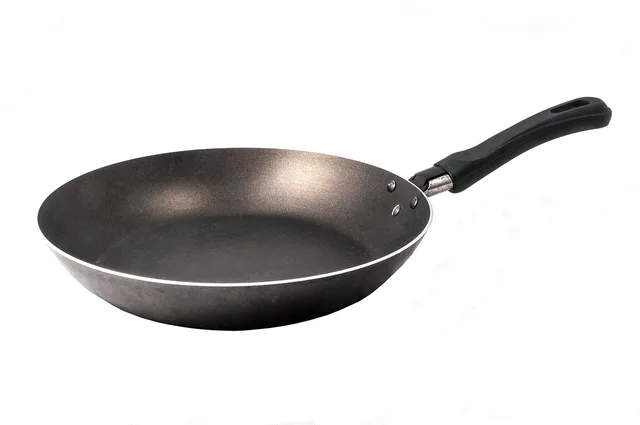
- Does my cookware work?Fridge magnet on every pan base. Firm grip means yes. A replacement set of induction-compatible cookware is typically $150 to $400.
- What does this exact model require electrically?From the installation manual, not the brochure. A full-size induction range typically needs a 240 volt circuit at 40 or 50 amps. Countertop units run on a standard 120 volt, 15 or 20 amp outlet.
- Does my panel have space and capacity?A load calculation answers it; a glance at the panel does not. Ask a qualified electrician to perform the calculation using the locally adopted National Electrical Code (NEC, NFPA 70); Article 220 covers load calculations. Ask your local building department or authority having jurisdiction (AHJ) whether an electrical permit and inspection are required for a new circuit; requirements vary by location. A new dedicated 240 volt circuit is commonly quoted at $300 to $1,500, depending on the cable run, the panel and permit fees.
- Will it fit the cabinet?Cutout dimensions and clearances from the manual, given to whoever does the cabinetry.
- Who caps the gas, and is it permitted?Have a licensed plumber or gas fitter disconnect and cap the line, as required by local rules. Ask the local building department or authority having jurisdiction (AHJ) whether a plumbing or gas permit and inspection are required; permit names and requirements vary by location.
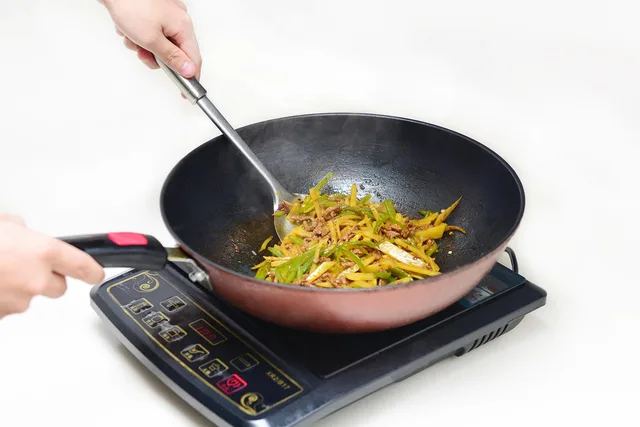
- How do I actually cook?Wok cooking, charring peppers and very low simmering all behave differently on induction.
- Does noise bother me?Some pans hum at high power. Try a portable unit with your own pans. Cooling fan noise at full power is commonly rated between 40 and 50 dB; pan hum is a separate tone that ratings do not capture.
- Do I have an implanted medical device?Ask your clinician about manufacturer guidance on distance from induction equipment.
- What happens in a power cut?Gas hobs can often be lit manually; induction cannot run at all.
Question one eliminates candidates fastest and costs nothing. Question three most often changes the budget.
Ventilation rarely decides the hob but often decides the cabinet. Downdraft units need depth behind or beside the cooktop and a duct route, or a recirculating filter kit where no duct exists. An overhead hood needs a duct path like any other appliance. Check the manual before the cabinet order goes out.
Nine questions before buying induction
- Does my cookware work?
- What does this model require electrically?
- Does my panel have space and capacity?
- Will it fit the cabinet?
- Who caps the gas, is it permitted?
- How do I actually cook?
- Does noise bother me?
- Do I have an implanted medical device?
Think about frequency, not enthusiasm
Households consistently overestimate how often they will use a new appliance feature. EIA notes that dishwashers are among the least-used appliances in American homes, and the same gap between owning and using applies to heat pump systems.
Applied here, the question is which zones you will actually use, how often you cook for more than two, and whether a large multi-zone hob earns its cost over a smaller one. A portable single-zone unit for a month is a genuinely informative experiment before committing.
Ignore promised updates
The Department of Energy's Emerging Technologies Collaborative for Buildings tracks where cooking equipment is heading. None of that work changes what a hob does in a kitchen today. Judge the model you can buy now, not a promised update.
A short decision table
The table below turns those answers into a decision.
| If this is true | Then |
|---|---|
| Most pans are non-magnetic | Add cookware replacement to the budget before deciding |
| Panel has no spare capacity | Get the load calculation before shortlisting appliances |
| You rent | Look at portable units; fixed installation needs written consent |
| You cook with a round-bottom wok | Test with a portable unit first; results vary a lot |
| You lose power often | Keep an alternative cooking method available |
For the general buying questions that apply to any electric upgrade, see what to ask before signing; the underlying physics is in how induction works.