
Costs
Part of Does induction cooking actually heat the pan instead of the hob?
What does induction really cost at home and in a shared building?
Induction costs at home and in a shared building come down to the appliance, the circuit, the gas cap-off, the cabinetry, the cookware, and the shared riser.
An induction conversion has six cost lines. The hob and the circuit come first, then panel work and the gas cap-off. Cabinetry and cookware finish the list. What induction really costs at home and in a shared building is the total of those parts.
A shared building adds charges around the riser on top of these six. The ranges below are typical figures, not quotes, so ask every bidder to price each line separately.
What to take away
- Six lines carry the cost at home. The hob and the circuit are usually the largest; panel work and the gas cap-off come next. Cabinetry and cookware complete the list. A full conversion typically lands between $1,700 and $12,600.
- Test every pan with a fridge magnet before you order the hob; non-magnetic cookware must be replaced.
- In shared buildings, riser capacity is the first question, not price.
- Get the riser position in writing before pricing anything.
- Running cost barely moves; cooking is a small share of household energy.
The six lines, with what each one is
The six lines
| Line | What it covers | Typical range |
|---|---|---|
| Appliance | The hob itself, 30-inch freestanding or slide-in | $700 to $2,500 |
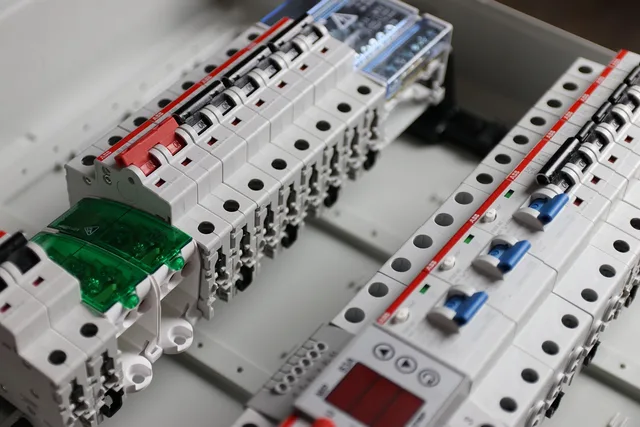
| Electrical circuit | New 240-volt run, receptacle, breaker, permit, inspection | $500 to $2,500 |
| Panel or service work | Only if the load calculation calls for it; a 200-amp upgrade runs $2,000 to $5,000 | $0 to $5,000 |
| Gas disconnection and cap | Licensed gasfitter caps the line, sometimes a separate inspection | $150 to $500 |
| Cabinetry and countertop | Cutout changes, filler strips, stone cutting on site | $200 to $1,500 |
| Cookware | Every non-magnetic pan replaced | $150 to $600 |
Those ranges are illustrative, not quotes. An electrician's number depends on run length, wall construction and whether the panel has two spare poles. A short run through an unfinished basement sits near the bottom of the circuit range, and a finished wall with no spare breaker slots sits near the top.

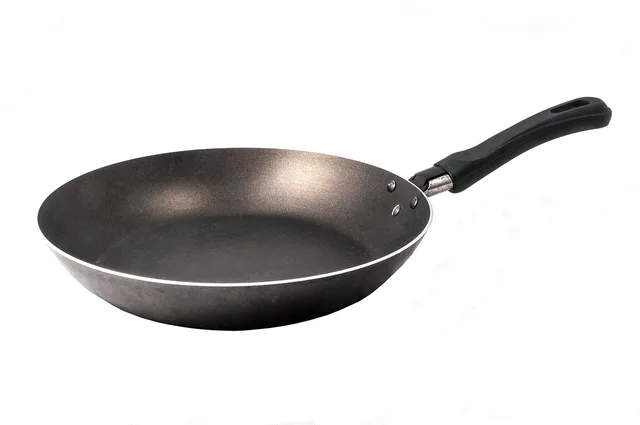
The cookware line surprises households on delivery day. Test every pan with a fridge magnet before ordering the appliance, then price the replacements. Cast iron and magnetic stainless steel work as they are, while bare aluminum, copper and most non-magnetic stainless pans do not. A full replacement set typically costs $150 to $600.
Why the running cost moves less than expected
Cooking is a small share of home energy use next to heating, cooling and hot water, so switching one appliance rarely changes the bill visibly either way. What moves it is the price of electricity, which is set regionally.
As of 2026, average residential rates run from roughly 11 cents to more than 40 cents a kilowatt hour across states, with Hawaii at the top. A hob zone draws 1,400 to 3,700 watts, so an hour at full power costs roughly 25 to 60 cents at a mid-range rate of 17 cents.
EIA's state electricity profiles show how differently prices and consumption behave across states, and its finding that retail electricity prices closely tracked inflation over a ten-year period gives the longer trend behind the number on your bill.
Keep gas for heating or hot water and the standing charge continues regardless of the cooker. Removing one gas appliance rarely removes the fixed cost. The fixed monthly charge on a gas account typically runs $10 to $25.
Shared buildings change the question
In an apartment, feasibility comes before cost. Does the unit already have a suitable circuit? Does the riser serving it have spare capacity? Who is allowed to claim that capacity?
Extra lines that appear in a shared building:
- Building consent, sometimes an engineer's assessment paid by the applicant: typically $500 to $3,000 together.
- Restricted working hours, which lengthens the jobexpect 10 to 25 percent added to labor.
- Lift booking, floor protection and common area depositslift time typically $50 to $300 a day, deposits $200 to $1,000 and usually refundable.
- A building electrician who may be the only party permitted to work at the riser: typically $100 to $200 an hour.
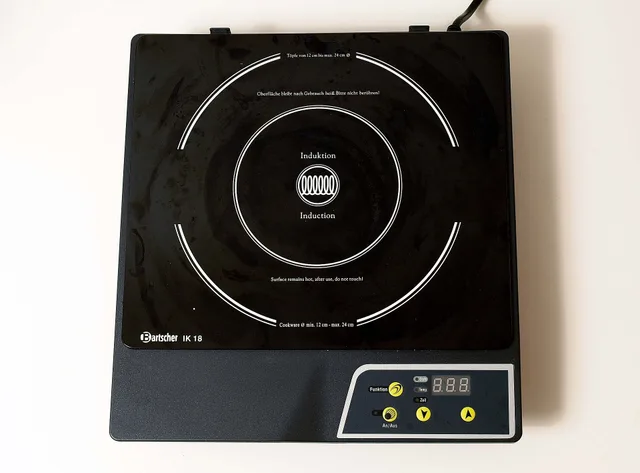
Ask the building for the riser capacity position in writing before pricing anything. A unit that cannot obtain a 240-volt circuit is choosing between a portable single-zone hob and staying with what it has, which is a much smaller decision. Countertop single-zone units typically cost $60 to $150.
Getting a comparable quote
Give every bidder the same document: the appliance model, its installation manual, photographs of the panel and the existing cabinet opening, and the building's requirements if you are in a shared building. Ask for the six lines priced separately, plus the shared-building charges where they apply.
Two bids that look far apart usually differ on the panel line. One includes a 200-amp service upgrade at $2,000 to $5,000; the other assumes the existing panel has two spare poles.
For how costs differ between building types, see our piece on houses versus shared buildings; the technology itself is explained in how induction works.
Common questions
Will induction lower my energy bill?
Probably not by much on its own. Cooking is a small share of household energy use, and the price of electricity is set regionally. At a rate of 17 cents a kilowatt hour, an hour of hob use costs roughly 25 to 60 cents.
Do I have to replace all my pans?
Only the ones that are not magnetic. Test each with a fridge magnet before assuming, then price the replacements, typically $150 to $600 for a full kitchen.
Is a portable unit a cheaper route?
Substantially, because it avoids the circuit, the cabinetry and the gas work entirely. Countertop single-zone units typically cost $60 to $150. It suits renters and units that cannot obtain a 240-volt circuit.
Can I get an incentive for switching?
Some utilities and states run appliance programs, and Massachusetts has offered induction rebates. Confirm current terms with your own utility or the program administrator, since rules vary by province, state and year.