Reviews
Part of Does induction cooking actually heat the pan instead of the hob?
Induction cooking testing: what to notice
Induction cooking testing can help compare boil speed, simmer behavior, cleanup and energy use in your kitchen, with household bill impact kept in perspective.
Manufacturer boil times are measured with an unstated pan, an unstated volume of water and an unstated starting temperature, which makes them useless for comparison. Induction cooking testing in your own kitchen can help you judge familiar cooking tasks before committing. This article sets out comparisons for boil speed, simmer stability, cleanup and energy use, and explains why the energy question deserves less attention than it usually gets.
What to take away
- Control the pan, the water volume and the starting temperature or the test means nothing.
- Simmer stability matters more in daily cooking than boil speed.
- Cleaning time is a real benefit and easy to measure.
- The energy saving is genuine and small in the context of a whole household.
Comparing boil performance
For a fair boil comparison, use the same compatible pan, water volume and starting temperature on both cooktops. Start timing at the same point and stop when the water boils; change only the cooktop.
Controlled Boil Test Setup
- Same pan, lid position, zone size
- Same water volume, measured
- Same starting temperature, thermometer
- Same finishing pointrolling boil
- Three runs, averaged
Run it on the old cooktop before it is removed if you can. If not, run it on a portable induction unit against your existing cooktop, which is the closest fair comparison available before committing.
Simmer stability, which matters more
Most cooking is not boiling. Set the lowest usable setting under a pan of water and watch it for twenty minutes. What you are looking for is whether the surface stays just below a boil, or whether it cycles between still and bubbling.
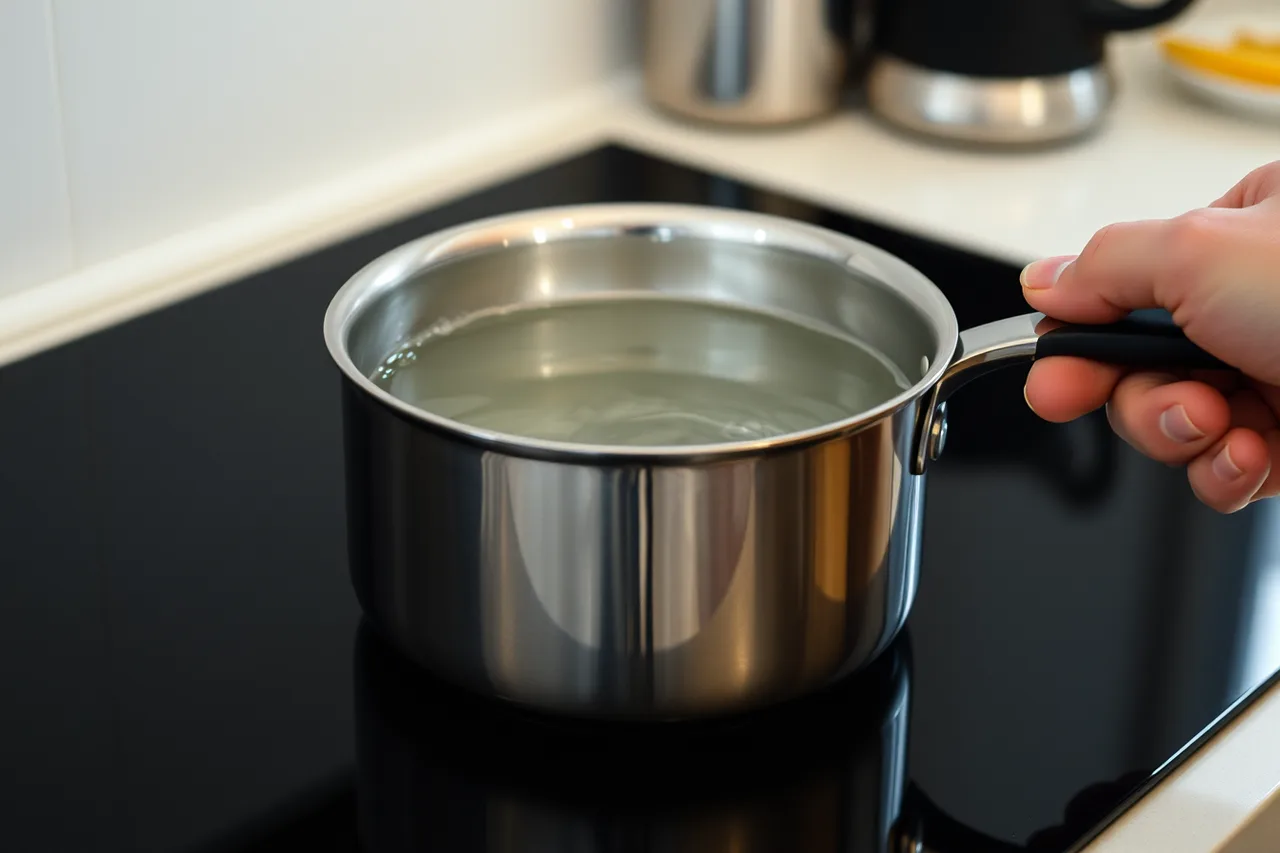
Some induction cooktops at very low settings pulse power on and off rather than delivering steady low output, which shows up as a rhythmic surge. Whether that bothers you is personal, and it is exactly the sort of thing you can only learn by trying.
Cleaning, which is easy to quantify
Time yourself. Boil over a small quantity of milk, let the surface cool, then clean it. Repeat on the old cooktop if it is still available. The difference is usually large and is one of the more reliable satisfactions people report, because the surface around the pan does not reach a temperature that bakes spills on.
The energy question, in proportion
Induction puts a larger share of its energy into the pan than a gas burner does, so it uses less energy per task. That saving is real but small next to a household's total energy use, and it is modest.
For a broader discussion of planning an induction upgrade in homes and shared buildings, see induction upgrade planning.
For scale, EIA reporting that air conditioning accounts for roughly 12 percent of U.S. home energy expenditures puts one major end use in context, and cooking sits well below that in most homes. A cooktop swap is not a bill-reduction strategy.
If you want to measure it anyway, the physics is straightforward. Energy is conserved through each conversion, as the EIA explainer on the laws of energy sets out, so compare how much input reaches the food with how much heats the kitchen.
On a portable unit, measure electricity with a plug-in meter. For gas, record the meter immediately before and after the same fixed cooking task. Compare the readings for your setup rather than expecting a universal result.
What it tells you
- Controlled boil
- Raw speed under fixed conditions
- Twenty-minute simmer
- Low-end control quality
- Timed clean-up
- A benefit you will notice daily
- Metered energy per task
- Efficiency difference, honestly small
Effort
- Controlled boil
- Low
- Twenty-minute simmer
- Low
- Timed clean-up
- Very low
- Metered energy per task
- Moderate
For the whole-house version of this measurement discipline, see our method for judging whether an upgrade was worth it; the technology itself is explained in how induction works.