Guides
Does induction cooking actually heat the pan instead of the hob?
Induction heats the pan, not the hob. A plain explanation of the magnetic field, why cookware has to be magnetic, and what that changes in a kitchen.
An induction hob does not get hot and then pass its heat to the pan. It makes the pan itself the heating element. That single difference explains almost everything people notice about induction cooking: the speed, the cool surface around the pan, the fussiness about cookware, and the faint noise some pans make.
What to take away
- A coil under the glass creates a changing magnetic field.
- That field induces currents in a magnetic pan, and the pan heats itself.
- Cookware must be magnetic, which is testable with a fridge magnet.
- The glass gets warm from the pan, not from the element.
What is happening under the glass
Under each cooking zone sits a coil of wire carrying alternating current. That current creates a changing magnetic field, which induces currents in a conductor it passes through.
Energy path in induction cooking
- Wall supplies alternating current
- Coil creates changing magnetic field
- Field induces currents in pan base
- Pan resistance turns current into heat
The EIA primer on the science of electricity covers that relationship. The same physics runs generators and transformers, here at saucepan scale.
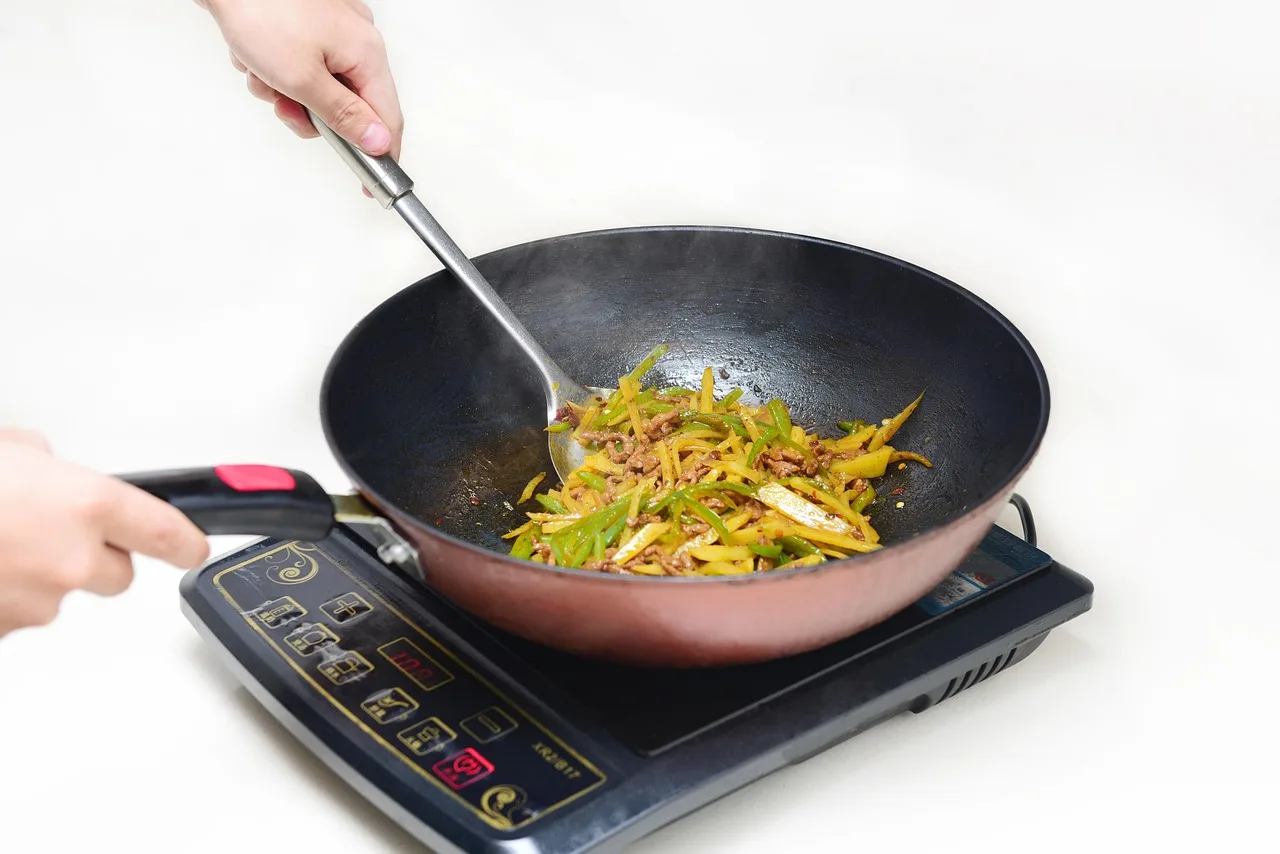
Put a magnetic pan on the zone and the induced currents circulate inside the base of the pan. The pan's own resistance turns those currents into heat.
Energy moved from the wall to the coil to the field to the pan, changing form at each step but not disappearing. The EIA explainer on forms of energy sets out that framework in plain terms.
Why the cookware matters so much
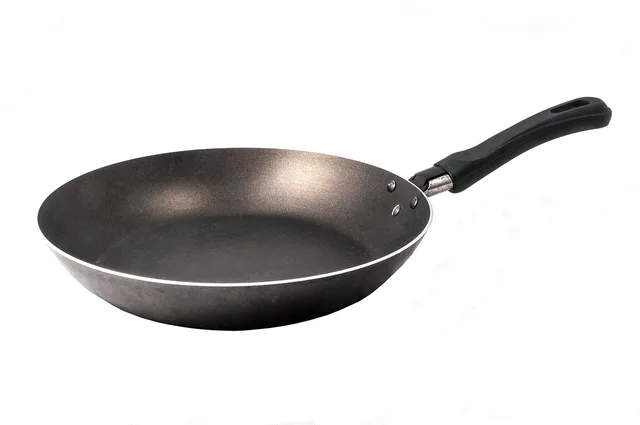
Only ferromagnetic materials respond usefully. Cast iron and most stainless steel work. Aluminum, copper and glass do not, unless the manufacturer has bonded a magnetic layer into the base.
Cookware compatibility with induction
Works
- Material
- Cast iron, magnetic stainless
- Magnet test
- Grips firmly
- Base condition
- Flat, matches zone size
Does not work
- Material
- Aluminum, copper, glass
- Magnet test
- Slides off or clings weakly
- Base condition
- Warped or much smaller
The test takes five seconds: hold a fridge magnet against the bottom of the pan. If it grips firmly, the pan will work. If it slides off or clings weakly, it will not, or will perform poorly.
Base flatness and diameter matter too, because coupling depends on contact area over the coil. A warped pan or one much smaller than the zone will heat unevenly and may not be detected at all.
What changes in the kitchen
| Difference | Practical consequence |
|---|---|
| Heat is made in the pan | Surface stays cooler; spills do not bake on as readily |
| Very fast response | Power changes take effect almost immediately |
| Pan detection | Lift the pan and the zone stops |
| No open flame | Nothing to blow out, and no combustion in the kitchen |
| Magnetic requirement | Some existing cookware will not work |
The noise question comes up often. Some pans hum or buzz, particularly multi-layer bases at high power, because the layers respond slightly differently to the field. It is a property of the pan more than of the hob.
Where it fits in a house
An induction range is an electrical appliance with a real load, and a full-size range generally needs a dedicated 240-volt circuit installed to the appliance's own instructions. Running that circuit is licensed electrical work.
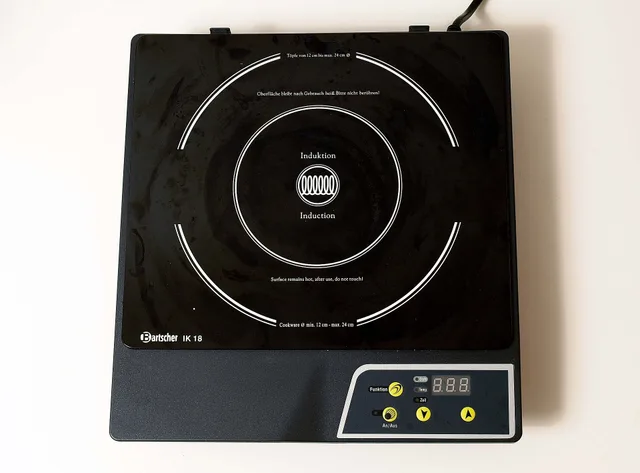
Whether a permit is required is set by your building department, so ask them rather than assuming. Portable single-zone units run on an ordinary outlet and are a genuine way to try the technology first.
If you are weighing this against other upgrades, our list of thirteen upgrade types puts it in order of commitment, and the electrification starting guide covers the panel capacity question that decides whether a full range is straightforward.
Common questions
Will my existing pans work?
Is induction the same as a smooth electric hob?
Does the glass still get hot?
Can I use a portable unit to try it?
In this guide
- Induction cooktop specs: which to check and which to ignoreInduction cooking specs that matter when choosing a cooktop: zone diameters, pan minimums, boost sharing, total load, and the marketing numbers to ignore.
- Induction cooking installation: trades, permits and sequenceInduction cooking installation is a small construction project: here are the trades, permits, codes, circuit work and cabinet issues that shape the job.
- What does induction really cost at home and in a shared building?Induction costs at home and in a shared building come down to the appliance, the circuit, the gas cap-off, the cabinetry, the cookware, and the shared riser.
- Induction Cooking Buying Guide: 9 Questions to AskThis induction cooking buying guide covers nine questions on cookware, circuits, cabinet fit, noise, medical-device guidance, and everyday cooking habits.
- Induction cooking testing: what to noticeInduction cooking testing can help compare boil speed, simmer behavior, cleanup and energy use in your kitchen, with household bill impact kept in perspective.