Features
4 things nobody tells you about thirteen electric home upgrades worth considering
Thirteen electric upgrade types for U.S. homes, sorted from low-risk to major work, with the electrical requirement and the trade involved noted for each.
What to take away
- The thirteen upgrades fall into three tiersfive need no new circuit, four need one dedicated circuit, and four are licensed service work with a permit and inspection.
- Envelope work comes first because it changes the size of every heat pump decision after it.
- The cost bands are typical pre-rebate U.S. ranges as of early 2026, rounded and deliberately wide.
- Most households do four or five of the thirteen across a decade, driven by equipment failure.
The thirteen upgrades and what each one needs
Each row gives the tier, the electrical implication and a typical cost band. The list runs from a tube of caulk to a new service drop. For the groundwork that precedes any of it, the electrification starting guide sets out fuel choices and sequencing.
The thirteen upgrades
| # | Upgrade | Tier | Electrical requirement | Typical U.S. cost band |
|---|---|---|---|---|
| 1 | Air sealing | No new circuit | None | $200 to $1,500 |
| 2 | Attic insulation top-up | No new circuit | None | $1,000 to $3,500 |
| 3 | Smart thermostat | No new circuit | Existing low-voltage wiring | $130 to $400 |
| 4 | LED lighting completion | No new circuit | None | $50 to $300 |
| 5 | Portable induction hob | No new circuit | Standard outlet | $60 to $300 |
| 6 | Heat pump water heater | One new circuit | Often a new 240V circuit | $1,200 to $3,500 |
| 7 | Ductless single-zone heat pump | One new circuit | New 240V circuit | $3,000 to $7,000 |
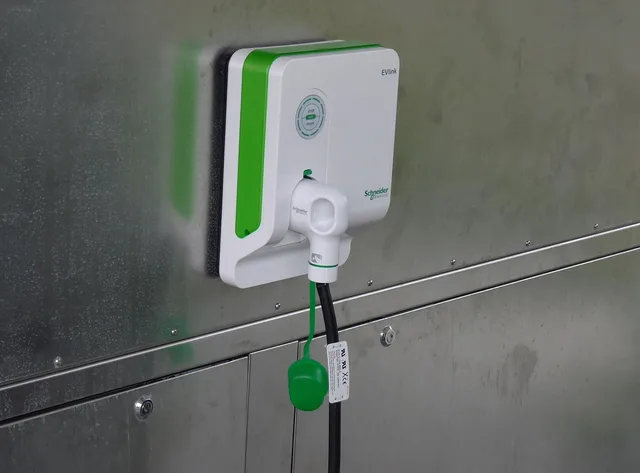
| 8 | Level 2 EV charging | One new circuit | Hardwired 240V, licensed | $800 to $2,500 |
| 9 | Induction range | One new circuit | Dedicated 240V, gas line decommissioning | $1,000 to $3,500 |
| 10 | Ducted heat pump replacing a furnace | Licensed service work | Circuits plus load calculation | $8,000 to $20,000 |
| 11 | Duct sealing and rework | Licensed service work | Often paired with panel work | $1,500 to $5,000 |
| 12 | Panel replacement or subpanel | Licensed service work | Permit and inspection | $1,500 to $4,000 |
| 13 | Service upgrade | Licensed service work | Utility coordination plus electrician | $2,500 to $8,000 |
Bands are typical U.S. ranges as of early 2026, rounded, pre-rebate, and wide because labour rates and access vary. ENERGY STAR publishes efficiency and savings figures for heat pump water heaters. The EIA's account of where electricity actually goes in U.S. homes is the reality check on assumptions.
Four things nobody tells you
- The tier decides who can do the work, not the price.A $300 thermostat swap and a $300 circuit are different jobs under different rules.
- A portable induction hob tests your pans and your habits, not a range.It says nothing about oven performance or four pans at once.
- Service upgrades run on the utility's clock.Your electrician cannot pull the meter or reconnect the service.
- Rebate paperwork is often due before the work starts.Retroactive claims get refused.
Example: a service upgrade, in sequence
- The electrician runs a load calculation under NFPA 70, the National Electrical Code, which governs service and feeder sizing.
- The permit is filed with your city or county, and the inspection is scheduled.
- The utility is booked for the meter pull and the reconnect, and that window is theirs.
- The inspector signs off, the utility reconnects, and the incentive claim goes in.
The utility owns the meter and the reconnect. Your electrician works inside the window the utility gives, and delays land on your calendar.
This tier is the one where no U.S. household can substitute its own labour. Items ten through thirteen sit behind walls or inside the service equipment. That is licensed work with a permit and an inspection.
If you are pricing that work, our comparison of house and shared-building costs shows how much the building type moves the number.
What changes in Canada
Canada works from its own code, CSA C22.1, adopted province by province, so the permit step and the inspecting authority differ. Rebates come from provincial and utility programs rather than one national list.
Capacity ratings matter more in a cold climate. Our guide to reading a spec sheet explains what to check before comparing quotes.
Choosing where to start
Two rules hold almost everywhere. Envelope before equipment sizing, or you buy capacity for a leaky house. Capacity assessment before adding circuits, or the panel gets done twice.
Beyond that, urgency wins. Equipment near the end of its life outranks equipment that still works, because failure removes your ability to choose. Our checklist for ranking electrification projects covers the criteria to score.
Common questions
Which of the thirteen pays back fastest?
Can I do the first five myself?
Do I need all thirteen?
Does a portable induction hob tell me whether induction is right for me?
In this guide
- Electric home upgrades comparison: which specs to checkAn electric home upgrades comparison lives on the spec sheet: the ratings, units, test conditions and electrical figures to extract before you compare.
- Electric home upgrades installation: the workdaySee how an electric home upgrades installation day moves from access and circuit routing through commissioning, outages, and inspection sign-off.
- Electric upgrade costs, compared between a house and a shared buildingThe same 200-amp service upgrade runs about 2,500 dollars in a house and 6,000 in a shared building, and the gap is access, consent and protection.
- Questions worth asking before you sign for an electric home upgradeThe questions that change the outcome of an electric home upgrade, grouped by who should answer them: the contractor, the utility, and your own household.
- After an electric home upgrade: baseline, weather normalization, and reading the resultA method for judging an electric home upgrade after installation: baseline usage, weather normalization, and reading results honestly, converting to money last.