
Rules
Part of Heat pump types compared on value, upkeep and fit
Where do local rules decide a heat pump can and cannot go?
Heat pump systems rules: sound limits, setbacks, flood elevation, refrigerant handling and association covenants all constrain heat pump placement.
What to take away
- Four layers decide where the outdoor unit can sitthe local zoning ordinance, the building and mechanical code, a sound ordinance, and private covenants such as HOA, condo or lease rules.
- Sound and zoning limits are measured at the property line. Equipment clearances come from the manufacturer's installation manual, which the inspector reads.
- Typical figures3 to 5 ft side and rear setbacks, 45 to 55 dBA at the line, and units raised 12 to 18 inches above snow or above the base flood elevation.
- Breaking a rule carries a billstop-work orders, HOA fines that accrue daily, forced removal, and a failed inspection that complicates a sale.
- Permits cover the electrical and mechanical work. Refrigerant handling requires an EPA Section 608 certified technician.
Four rule sources, four different answers
No single office approves a heat pump. Each layer answers a different question, and any one of them can reject the spot you picked.
Four placement rule sources
- Zoning setbacksdistance to lot line
- Noise ordinanceslimit at property boundary
- Flood elevationequipment above set height
- Snow clearancemanufacturer installation instruction
Four rule sources
Who enforces it
- Zoning ordinance
- City or county planning department
- Building and mechanical code
- Building department
- Sound ordinance
- Code enforcement
- Private covenants
- HOA, condo board, landlord, historic commission
Typical constraint
- Zoning ordinance
- Side and rear setbacks for accessory equipment, screening, overlay districts
- Building and mechanical code
- Manufacturer clearances, structural support, condensate and defrost drainage
- Sound ordinance
- A dBA cap at the property line, day and night
- Private covenants
- Approved locations, screening, visibility from the street
Cost of ignoring it
- Zoning ordinance
- Stop-work order, removal at your cost, variance fees to fix it
- Building and mechanical code
- Failed inspection, re-inspection fees, no final sign-off
- Sound ordinance
- Citations, fines, an order to relocate or screen the unit
- Private covenants
- Fines per day, forced removal, a denied architectural request
Start with planning, because a zoning answer can cancel every other conversation. Our overview of how building rules shape a project shows where these layers meet before equipment is chosen.
Example: the numbers that decide placement
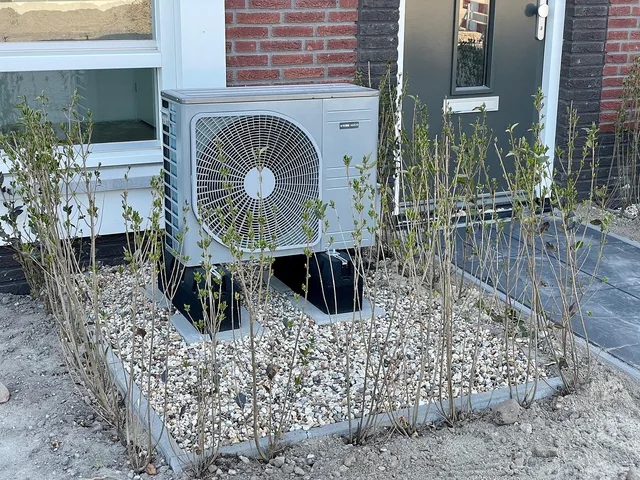
Setbacks come first, because they are measured from your lot line and not from the house. Suburban zoning commonly requires 3 to 5 ft of side and rear setback for accessory equipment.
Dense-city ordinances sometimes allow placement at the line itself when the manual's clearance is met. On a narrow lot, that single number decides which wall is available.
Manufacturer clearances are often tighter than the code. Manuals commonly call for 12 to 24 inches of service access and 24 to 36 inches on the discharge side. The inspector reads the manual, so a tight alcove fails even where zoning permits it.
Sound limits are written at the property line. Many ordinances cap daytime sound at 45 to 55 dBA and drop the night limit by another 5 dB.
A unit rated in the low 50s dBA at 3 ft clears that only with distance or a screen. Cold-climate models shed water and ice during defrost, which is why heat pump performance shifts with climate and why the discharge side needs drainage room.
Elevation moves the unit vertically. Snow-belt installations commonly sit 12 to 18 inches above grade, higher where drifts form.
Inside a Special Flood Hazard Area, equipment must reach the base flood elevation, and many communities add 1 to 2 ft of freeboard. That can put the unit at second-floor height.
Which system you pick changes all of these numbers, and our comparison of heat pump types lines up footprint, noise and placement.
Permits, approvals and refrigerant
An outdoor unit usually needs a mechanical permit, and its circuit needs an electrical permit. Some jurisdictions bundle the two; others issue separate ones.
Unpermitted work surfaces at resale, where lenders can demand a retrofit before closing. That is the quiet cost of skipping the counter.
The circuit, disconnect and panel load calculation fall under NFPA 70, the National Electrical Code, which the electrical inspector applies separately from the mechanical sign-off. A panel that cannot carry the load turns a placement question into a service upgrade.
Refrigerant is federally regulated. Charging, recovery and disposal require a technician certified under EPA Section 608, and the paperwork follows the equipment.
Homeowners cannot legally buy or handle refrigerant, and an uncertified charge can void the warranty or leave the system unserviceable later.
Federal minimums for new central heat pumps are expressed as SEER2 and HSPF2, and state energy codes that follow the IECC reference those minimums. The numbers are revised on their own schedule, as EIA's coverage of a proposed furnace efficiency standard shows.
Before you sign anything, run our nine checks on a heat pump quote.
Private rules decide more than codes
Codes set a floor. Covenants set whatever the board will approve, and the two rarely match.
An HOA may demand screening, a specific wall, or a color match, and it can fine per day until the unit moves. Historic districts review anything visible from a public way, which usually rules out the street-facing side.
Condo boards control common property, roof access and facade penetrations, so a balcony unit is often the only option that survives review. Leases typically bar fixed alterations without written consent.
Private rules by building type
Rule source
- Association covenants
- Visibility, screening, approved locations
- Historic district review
- Visible street-facing elevation
- Condominium bylaws
- Facade penetrations, roof access
- Lease terms
- Fixed alterations need written consent
Typical constraint
- Association covenants
- Historic district review
- Condominium bylaws
- Lease terms
Get the approval in writing before the design is final, so the design can absorb the answer.
How to check your address
Work through this order before you buy equipment:
- Planning or zoning departmentask for setbacks, screening rules and any overlay district, including historic status.
- Building departmentask which permits the work triggers and what the inspector will check.
- HOA, condo board or landlordrequest written approval and the exact location allowed.
- Code enforcement or the ordinance textfind the dBA limit, the measurement point and the day or night split.
- Utility or state program: confirm whether a rebate requires a permit or a specific efficiency tier.
A unit that cannot be sited legally is a unit you have to sell, and the labor and restocking cost lands on you. Our guide to getting started with home electrification sets these decisions in order.