Reviews
Part of A guide to judging what a home energy monitor can actually tell you
5 things nobody tells you about residential energy monitors
Validate a home energy monitor against the utility meter, test each channel with a known load, and find out how far the disaggregation can be trusted.
A residential energy monitor that has never been checked against anything produces confident numbers, not accurate ones. Five things tend to stay out of the manual and the sales page, and all five can be tested in a weekend with a stopwatch, a kettle and a meter reading of your own.
What to take away
- Validate the whole-home total against the utility meter over a fixed window.
- Test each channel with a known load you switch yourself.
- Probe the disaggregation before trusting any appliance breakdown.
- Compare your totals against EIA regional data.
- Re-run the checks after any panel work.
1. Nobody checks the total against the utility meter
Pick a window of at least a few hours. Read the utility meter at each end, then compare the difference with the monitor's total for the same window.
Two cautions make this test meaningful. Read the meter yourself, because billing periods rarely line up with the window you care about. Run it overnight rather than for an hour, so small timing differences do not dominate.
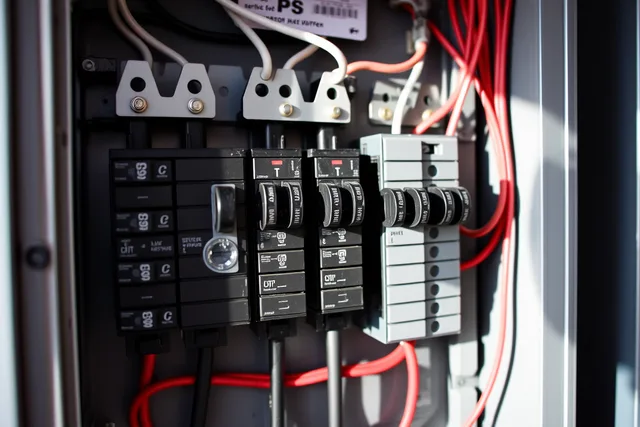
A close match validates the whole-home measurement. A wide gap usually means a current transformer is misplaced, reversed or clamped on the wrong conductor. Those are installation issues, not product faults.
2. A mislabeled channel looks like a broken monitor
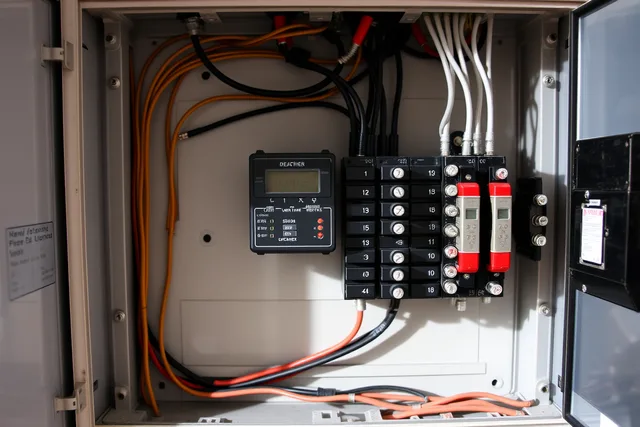
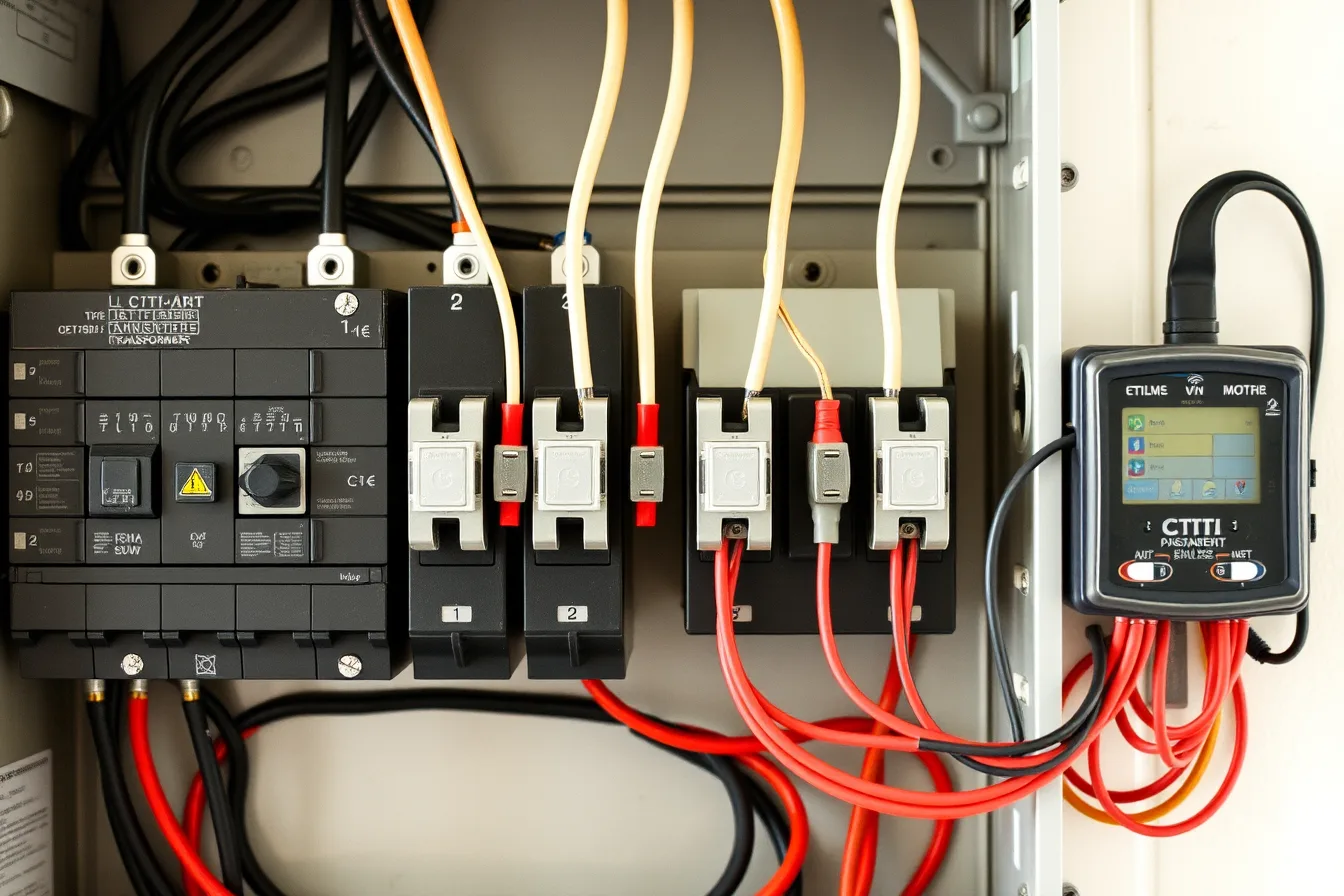
Switch one appliance, watch the channel move, and check that the step size is plausible. A kettle, a space heater or an oven draws enough to show clearly on a 200 A main or a 50 A branch CT.
A mislabeled channel looks like a broken monitor
| What you see | What it means |
|---|---|
| Correct channel steps by a plausible amount | Channel is mapped correctly |
| Wrong channel responds | Transformer on the wrong conductor |
| Negative step | Transformer orientation reversed, arrow pointing away from the load |
| No response anywhere | Circuit not monitored, or channel inactive |
| Two channels respond together | Shared circuit, or double-counting |
| A 240 V load reads about half | One CT on a two-pole circuit sees a single leg |
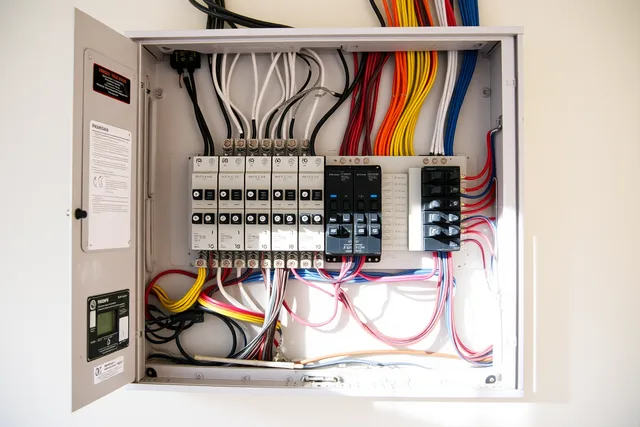
Do this for every channel and write the results on the panel directory. It takes an hour and it is the difference between data and decoration.
Channel count drives the hardware price. Shelly EM covers two circuits over Wi-Fi with no subscription and typically sells for $50 to $80.
An Emporia Vue kit with eight or sixteen branch circuits and two mains CTs typically runs $130 to $200 as of 2026. Sense skips branch clamps and detects appliances from the whole-home signature, typically $250 to $350.
IoTaWatt logs up to 14 CT inputs to a local SD card without a cloud account, typically $200 to $300. Eyedro EHM units cover two to four circuits with a hosted dashboard, typically $130 to $250.
Most DIY kits ship split-core CTs that clamp over an installed conductor. Solid-core CTs require the wire to be disconnected first, which usually means an electrician.
3. Disaggregation is inference, not measurement
If the product claims appliance detection, test it on purpose. Run one large appliance alone and see whether it is identified.
Then run two at once and see whether both survive. Then run a variable-speed load and watch what the algorithm does with it.
Expect mixed results. Large, distinctive on-off loads are usually identified well. Overlapping loads and variable-speed equipment are where the inference degrades. Knowing which of your appliances fall into which group tells you exactly how far to trust the monthly breakdown.
4. Your household is one point in a national dataset
Comparing against published figures catches gross errors. EIA's open data service offers programmatic access to its published energy series, the tidiest route if you want to check your own record against regional consumption or price data instead of eyeballing a chart.
Seasonal expectations help too. EIA's forecast reporting, such as the season in which it expected residential electricity bills to increase slightly over the summer, shows the direction of the wider market. That tells you whether a change in your own data is you or everybody.
5. Panel work silently invalidates the map
Re-run the checks any time the panel is opened. Adding a circuit, replacing a breaker or moving a transformer can invalidate a channel mapping, and nothing in the software will tell you.
For the whole-house version of this measurement discipline, see our method for testing whether an upgrade was worth it; the monitoring levels are covered in what a monitor can tell you.