Reviews
Heat pump types compared on value, upkeep and fit
Ducted, ductless, multi-zone and ground-source heat pumps compared on what each demands from a house, what upkeep it needs, and where each fits badly.
A heat pump moves heat rather than burning fuel to make it. The same cycle shows up in four heat pump types, and this comparison covers them on value, upkeep and fit. The shape is a building decision before it is an equipment decision.
What to take away
- The building picks the system type; the spec sheet only picks the model.
- Ductless skips duct losses and puts a visible head in each room it serves.
- Ground-source has the strictest site requirements and the least room to change your mind later.
- Cold-climate capacity is a rating at a stated outdoor temperature, not a marketing word.
- A load calculation, not a look at the panel door, decides whether your service can carry the equipment.
- Typical installed costs as of 2026 run $3,000 to $6,000 for single-zone ductless, $8,000 to $20,000 for ducted central, and $20,000 to $40,000 for ground-source before federal credits.
Why the category is growing
Electric heating is no longer a niche in U.S. housing. EIA reporting that electricity is becoming more common for residential heating tracks a shift in the housing stock itself, not a manufacturer claim.
That shift is why most metropolitan areas now have several contractors who service this equipment. Local service depth matters more to a homeowner than any single efficiency number. EnergySage is one real marketplace where homeowners can request competing quotes, and manufacturers such as Mitsubishi Electric and Daikin run locator tools for certified installers.
The four shapes, with named models and costs
The four shapes
Named examples
- Ducted central, split
- Mitsubishi Electric, Trane, Carrier Infinity, Lennox Dave Lennox Signature, Bosch IDS
- Ductless single-zone
- Mitsubishi Electric M-Series, Fujitsu Halcyon, Daikin Aurora, LG Dual Inverter
- Ductless multi-zone
- Mitsubishi Electric Hyper-Heating INVERTER, Daikin VRV, Fujitsu Airstage
- Ground-source
- WaterFurnace, ClimateMaster, Bosch geothermal, Carrier geothermal
Suits
- Ducted central, split
- Houses with sound existing ductwork
- Ductless single-zone
- One room, an addition, a problem space
- Ductless multi-zone
- Houses without ducts, zoned control wanted
- Ground-source
- Sites with land or drilling access
Struggles with
- Ducted central, split
- Leaky or undersized ducts, no duct space
- Ductless single-zone
- Whole-house comfort on its own
- Ductless multi-zone
- Aesthetics, several indoor units
- Ground-source
- Small lots, rock, poor access
Upkeep character
- Ducted central, split
- Filters, plus duct integrity over time
- Ductless single-zone
- Per-head filters and coil cleaning
- Ductless multi-zone
- More heads, more cleaning points
- Ground-source
- Least outdoor maintenance, buried loop
These are categories of equipment, not endorsements.
Cold-climate models and ratings
| Type | Named cold-climate model | Published cold-weather rating |
|---|---|---|
| Ductless single-zone | Mitsubishi Electric M-Series H2i plus | Full heating capacity at 5°F, operation to -13°F |
| Ductless single-zone | Fujitsu Halcyon XLTH | 100% heating capacity at 5°F, operation to -15°F |
| Ductless multi-zone | Mitsubishi Electric Hyper-Heating INVERTER (MXZ) | Full heating capacity at 5°F, operation to -13°F |
| Ducted central | Carrier Infinity Greenspeed | Heating operation to -30°F |
| Ducted central | Lennox Dave Lennox Signature SL25KCV | Heating operation to -20°F |
| Ground-source | WaterFurnace 7 Series | Variable speed, published COP up to 5.2 |
| Ground-source | ClimateMaster Trilogy 45 Q-Mode | Published COP up to 5.0 |
The federal residential clean energy credit covers 30% of a geothermal heat pump's cost with no cap through 2032. Air-source heat pumps get a 30% credit up to $2,000 under section 25C.
Ground-source deserves its own note. The buried loop explains both its advantages and its constraints. Nothing sits outside weathering, and nothing can be added later without repeating the excavation.
Fit is decided before value
Three site facts settle most of the choice before efficiency enters the conversation.
Three site facts before efficiency
- Duct conditionleaks, size, unconditioned routing
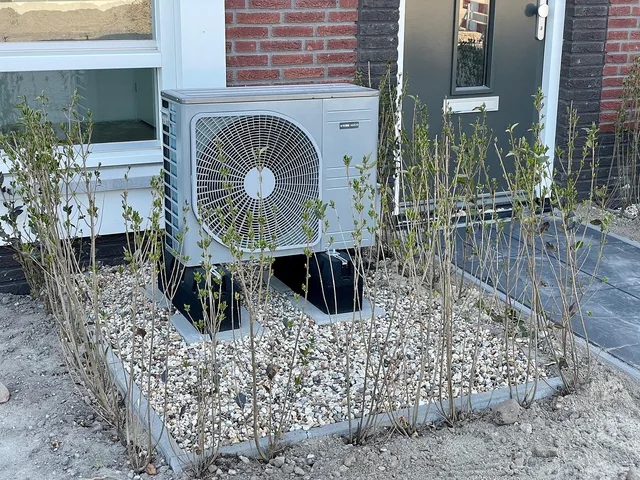
- Outdoor placementsetbacks, sound, snow, visibility
- Electrical capacityload calculation, not panel door
- New circuits or panel changeslicensed permit work
- Duct conditionwhether existing ducts are sealed and sized for the equipment, or whether there is space to run new ones.
- Outdoor placementwhere the outdoor unit can sit, or whether the site has land and access for a buried loop.
- Electrical capacity: whether the service and panel can carry the load, confirmed by a load calculation.
Those facts also set the cost. A house with sound ducts and room on the panel is a ducted central job. A house with no duct space and no land for a loop is a ductless job.
Value here means installed cost plus running cost over the years you stay, plus upkeep, minus the credits you can claim.
Fit, cost and running cost
Fit it needs
- Ductless single-zone
- One outdoor spot, one room to serve
- Ductless multi-zone
- Outdoor spot, several rooms, no ducts needed
- Ducted central
- Sound ducts, space for equipment, panel capacity
- Ground-source
- Land or drilling access, largest electrical load
Typical installed cost (2026)
- Ductless single-zone
- $3,000 to $6,000
- Ductless multi-zone
- $6,000 to $15,000
- Ducted central
- $8,000 to $20,000
- Ground-source
- $20,000 to $40,000
Running cost character
- Ductless single-zone
- No duct losses; one head to clean
- Ductless multi-zone
- No duct losses; cleaning scales with head count
- Ducted central
- Depends on duct tightness
- Ground-source
- Highest published efficiency, COP up to 5.2
The running-cost gap comes from what each unit sees. Ground-source sees a steady ground temperature, so it holds the highest published efficiency. Ducted air-source runs through attic or crawlspace ducts, where a typical quoted loss is 20 to 30 percent of the air moved. Ductless avoids that path entirely.
Some cold-climate models hold full capacity at 5°F, so less backup resistance heat runs. Resistance heat is the most expensive way to heat a house.
Anything touching new circuits, a panel change or the service is licensed electrical work, permitted and inspected. Your electrician and the local authority having jurisdiction apply the NEC as adopted where you live.
Upkeep differs more than people expect
Ducted systems concentrate maintenance in one place: a filter, a coil, a condensate path. Multi-zone ductless spreads it across every indoor head, each with its own filter and blower wheel, so the cleaning burden scales with head count.
Ground-source moves the burden underground, where it mostly disappears, at the cost of a loop that is hard to inspect if something does fail.
Typical upkeep intervals: ductless head filters every 2 to 4 weeks in heavy use, a professional coil cleaning once a year, and ducted filters every 1 to 3 months depending on the filter.
Buried loop pipe often carries a 50-year warranty, while the indoor unit typically has a 10-year parts warranty.
For a structured way to score candidates, see our heat pump buyer checklist. For the wider project context, the electrification starting guide.
Reading cold-climate claims
Capacity falls as outdoor temperature drops, and every system has a point where backup heat takes over. What separates candidates is where that point sits and how much capacity remains just above it.
Ask what the backup heat lockout is set to at commissioning, and get it in writing before you sign.
The Department of Energy's work on heating, ventilation, air conditioning, refrigeration and water heating is a reasonable place to read further on where the technology is heading.
To compare published ratings, NEEP maintains a cold-climate heat pump product list that names models and their capacity at 5°F and -13°F.
Common questions
Do heat pumps work in cold climates?
Cold-climate rated equipment is built for it. What decides it is capacity at your design temperature, not the technology in general. Ask for that number at the outdoor temperature your area actually reaches.
Is ductless less efficient than ducted?
It avoids duct losses, which helps, and it distributes heat differently, which can hurt. The comparison depends entirely on the house. A ducted system in tight, well-sealed ducts can beat ductless; a ducted system in leaky ducts usually will not.
Is ground-source worth the extra work?
Where the site supports drilling or trenching and you plan to stay, possibly. It is the hardest option to add later, so it belongs in the earliest decision, not the last. Get a site assessment before you commit to a quote.
Can I keep my existing ductwork?
Sometimes. Have it tested for leakage and sized against the new equipment rather than assuming. A contractor who will not test the ducts before quoting a ducted system is telling you something.
How much does each heat pump type cost?
Typical installed ranges as of 2026: single-zone ductless $3,000 to $6,000, multi-zone ductless $6,000 to $15,000, ducted central $8,000 to $20,000, and ground-source $20,000 to $40,000. Federal tax credits can cover 30% of the cost, up to $2,000 for air-source and uncapped for geothermal.
In this guide
- Heat pump quotes: nine checks worth making before you signThe nine things to verify before accepting a heat pump quote, from design temperature capacity to backup heat lockout and documented commissioning readings.
- Where do local rules decide a heat pump can and cannot go?Heat pump systems rules: sound limits, setbacks, flood elevation, refrigerant handling and association covenants all constrain heat pump placement.
- Daily habits change in specific ways after a heat pump replaces a furnaceWhat changes in daily life after a heat pump replaces a furnace: airflow that feels different, thermostat habits that stop working, and defrost cycles.
- Which heat pump options actually work for renters and small spaces?Reversible options for renters, apartments and small homes: window and portable units, single-zone systems, and what a landlord actually has to approve.
- Heat pump systems planning: Fixed vs flexible choicesHeat pump systems planning separates hard-to-reverse choices like unit placement and line-set routes from flexible controls, filters and schedules.