Guides
Part of 4 things nobody tells you about thirteen electric home upgrades worth considering
Electric home upgrades installation: the workday
See how an electric home upgrades installation day moves from access and circuit routing through commissioning, outages, and inspection sign-off.
Quotes describe outcomes. They rarely describe the day. This guide to electric home upgrades installation covers what physically happens during an electric upgrade job, what the household loses while it happens, and which steps carry the most risk of a surprise. Knowing the sequence makes it far easier to tell whether a job is going normally or going wrong.
What to take away
- Access and protection come before any tools are used.
- Circuit runs are the step most likely to reveal a surprise.
- Commissioning is a measurement exercise, not a switch-on.
- The permit closes at inspection, not at the end of the work.
Before anything is removed
A competent crew starts by walking the route: where equipment comes in, where the old unit goes out, which floors get covered and which doorways get protected. They confirm shut-off locations for water, gas and electricity, and they confirm who is home and where pets are.
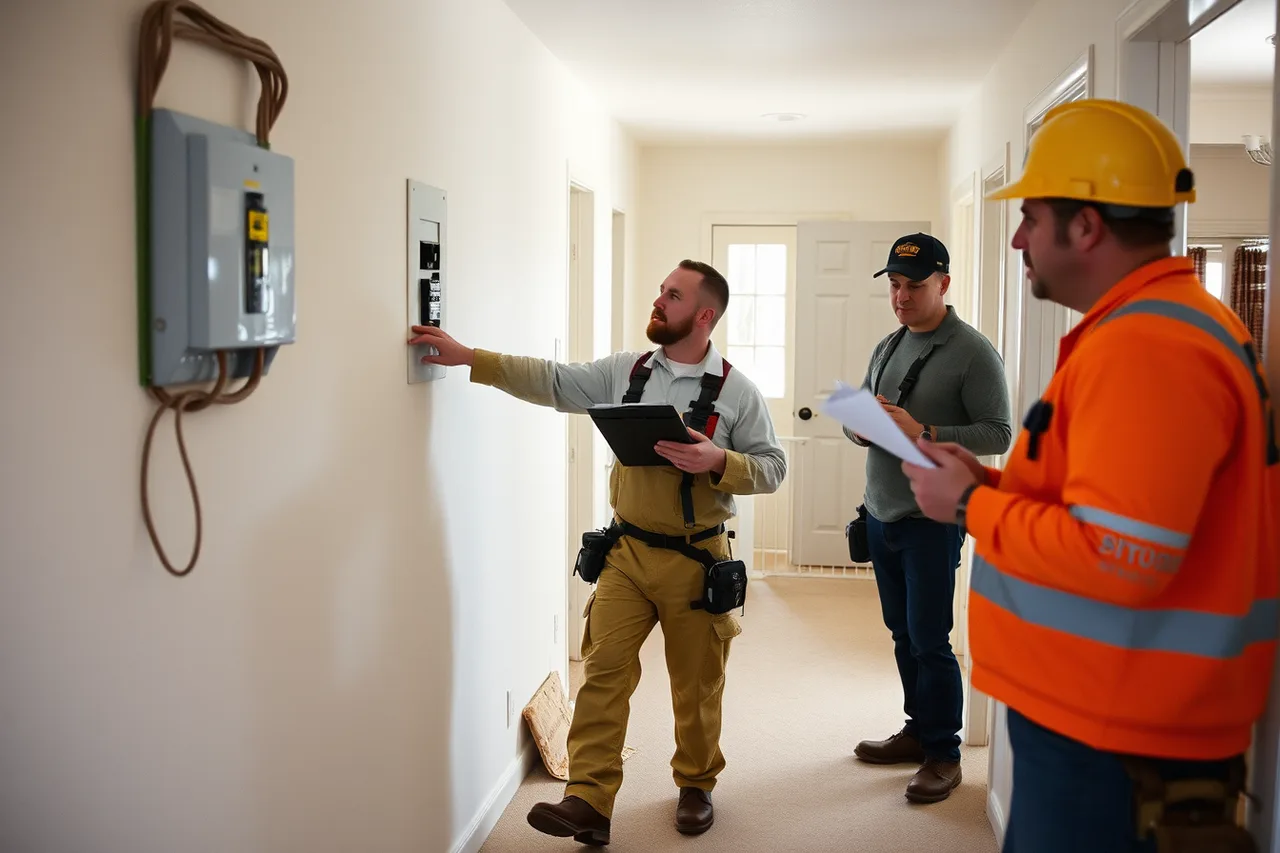
This part takes twenty minutes and predicts the rest of the day fairly reliably. A crew that skips it is usually a crew that will also skip the measurement steps at the end.
Demolition and the circuit run
Removal of the old equipment is usually the quickest phase. The new circuit is where the schedule lives or dies.
Running a new circuit means finding a path from the panel to the equipment through the home's actual construction. Finished basements, plaster walls, fire blocking and old wiring methods slow this down. None are fully visible during a site survey.
This is where a fixed-price quote meets reality. The quote should state in writing how unforeseen routing is handled.
Everything in this phase is licensed electrical work. Panel connections, breaker installation, and changes at the service are performed by an electrician, with a permit where required. The applicable electrical rules are the National Electrical Code (NEC), as adopted and amended by the state or local jurisdiction. The panel cover comes off for nobody else.
Before work starts, ask which local building department—the authority having jurisdiction (AHJ)—issued the permit and who is responsible for obtaining it; requirements vary by location. Find the department through your city or county government website, and use the permit number to check the permit record. If a permit card is issued, keep it with the inspection record and final sign-off. Verify the electrician’s license through the state or local agency that maintains the license lookup.
Commissioning, which is measurement
Once the equipment is connected, commissioning proves it does what was specified. It is a set of readings, not a demonstration that the unit turns on.
Expect the technician to record and hand over:
- Supply and return air temperatures, and airflow.
- Refrigerant charge verification by the manufacturer's method.
- Electrical measurements at the equipment.
- Control configuration, including any backup heat lockout settings.
Understanding what those electrical readings mean is easier with the EIA primer on how electricity is measured, which sets out watts, kilowatt hours and the relationship between them in plain terms. You do not need to interpret the numbers yourself, but you should receive them.
What the household loses meanwhile
| Upgrade | Typical loss of service | Realistic duration |
|---|---|---|
| Heating system replacement | Heat, and often hot water | Most of a day, sometimes two |
| Water heater replacement | Hot water | Several hours |
| Range replacement | Cooking | A few hours |
| Panel replacement | All power | Most of a day |
| Service upgrade | All power, plus a utility visit | Scheduled by the utility |
Plan around the panel and service rows in particular. A whole-house outage on a working day is manageable; the same outage with a home office and no notice is not. For a service change, ask whether the utility must disconnect and reconnect service, who will request that work, and whether the utility has requirements for the meter equipment. Confirm the outage window with the electrician and utility, since utility scheduling varies.
Inspection closes the job
For work requiring a permit, the permit is not closed until the inspector signs it. Corrections at this stage are ordinary and are the point of the process. An inspector commonly checks conductor and breaker sizing, connections and grounding or bonding, panel circuit identification, and required safety devices; the exact checklist depends on the adopted code and scope of work. Keep the permit number, permit card if issued, inspection record, inspection date, and final sign-off with the equipment documents.
The research program behind U.S. residential installation practice, the Department of Energy's residential buildings integration team, exists in large part because installation quality determines whether a design performs. For how contractors organize all of this, see our piece on how local installers run a job; the full upgrade field is listed in the thirteen upgrade types.