Reviews
Part of Home electrification: panels, permits and upgrades
Home electrification product categories: what to compare before you buy
Learn the seven home electrification product categories, which brands and specs matter, and how to compare them for your home before you buy.
What to take away
Home electrification product categories compared, 2027 edition. Seven groups cover most residential work. The first four are space conditioning, water heating, cooking and vehicle charging. The last three are solar panels, batteries and electrical infrastructure. Publicly listed specifications and typical installed costs show where each group fits.
- Pick the category before the model. A good unit in the wrong category still disappoints.
- Compare capacity at your design temperature, not nameplate capacity at mild conditions.
- Ask for the test standard behind every efficiency number, so two units sit on one basis.
- Check local parts and service before price. Long outages are usually a support problem.
- Sizing and installation quality move performance more than the badge on the box.
- Panel degradation rates and battery retained-capacity terms matter as much as day-one ratings.
The seven categories, and the names in each
These seven groups cover most residential electrification work. Buyers weigh the products inside each group against one another.
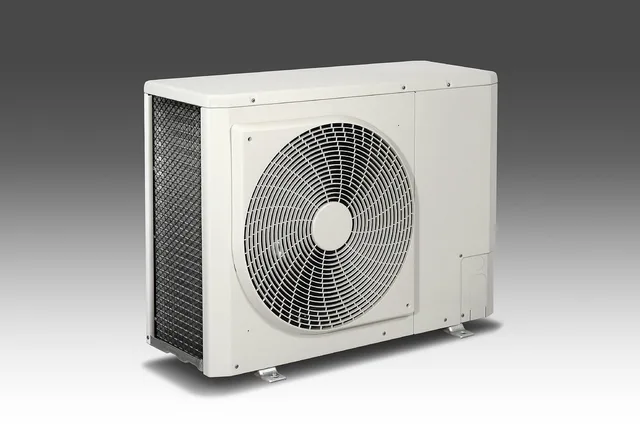
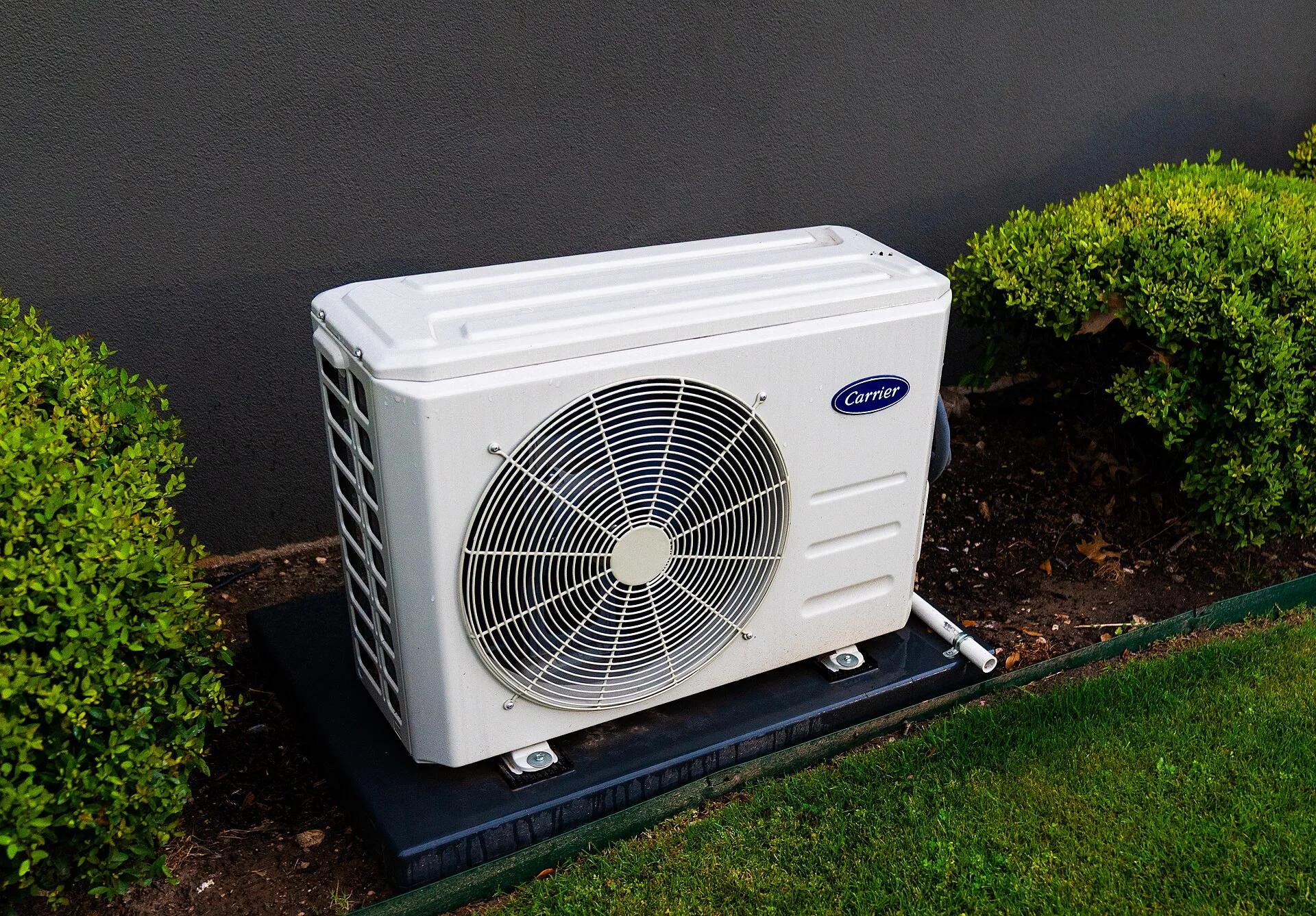
Space conditioning. Cold-climate ducted systems include the Mitsubishi Electric Hyper-Heating H2i and the Fujitsu Halcyon XLTH line. Mitsubishi lists H2i outdoor units for operation down to -13°F. Fujitsu lists Halcyon XLTH low-ambient models down to -15°F.
Ductless multi-head systems from Daikin and LG suit homes without ductwork. Daikin MXS and LG Multi F lines put several indoor heads on one outdoor unit. Ground-source units from WaterFurnace use buried loops and cost the most to install, typically $20,000 to $40,000 before incentives as of 2026.
Water heating. Heat pump water heaters include the Rheem ProTerra, the A. O. Smith Voltex and the Bradford White AeroTherm. Rheem ProTerra 50-gallon models list UEF in the mid-3s to low-4s. A. O. Smith Voltex 50-gallon models list UEF around 3.45. Bradford White AeroTherm 50-gallon models list UEF around 3.35.
Gas tankless units from Rinnai and Navien stay in the mix where gas service exists. The Rinnai RU199iN and Navien NPE-240A2 are condensing models with listed UEF around 0.95. Resistive tanks are the cheap fallback, with listed UEF around 0.9 and typical installed cost of $600 to $1,200.
Cooking. Induction ranges from Bosch, GE Profile and Frigidaire include 30-inch models with power-boost elements near 3,600 to 3,700 watts. Plug-in single-zone hobs draw about 1,800 watts and run on a standard counter outlet. Radiant electric is the lower-cost alternative.
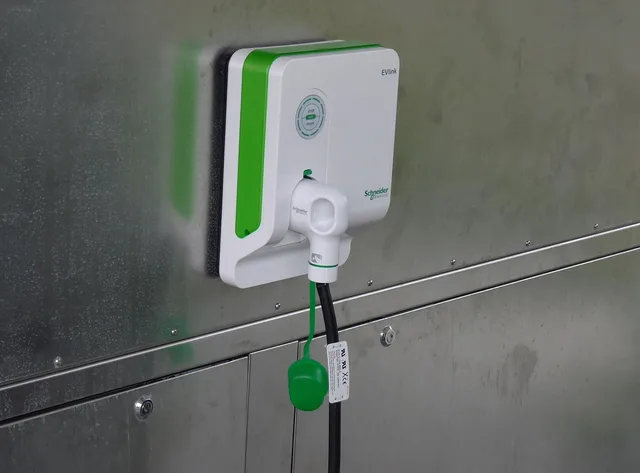
Vehicle charging. Portable Level 1 equipment uses an existing 120V outlet and adds roughly 3 to 5 miles of range per hour. Hardwired Level 2 units such as the ChargePoint Home Flex and the Emporia EV Charger run on a dedicated circuit.
They reach 48 amps, or about 11.5 kW, when hardwired. Plug-in versions are limited to 40 amps on a NEMA 14-50 outlet. Typical installed cost runs $1,200 to $2,500 as of 2026.
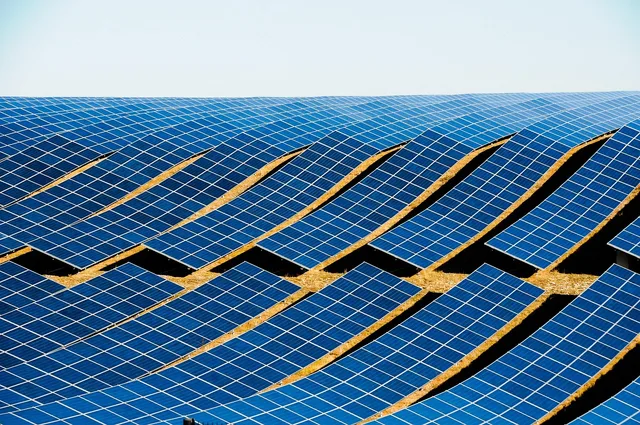
Solar panels. Two decisions come first: the module, and the inverter that converts its DC output into household AC. Residential quotes lean on a handful of module makers: Qcells, REC, Maxeon, LONGi and Canadian Solar.
Qcells builds the Q.TRON BLK M-G2, an N-type module rated near 425 watts with efficiency around 22%. REC's Alpha Pure-R line reaches 430 watts and carries a 25-year performance warranty. Maxeon 6 modules list efficiency up to 22.8% and a 40-year performance warranty.
LONGi's Hi-MO 6 and Canadian Solar's TOPHiKu6 sit in the same N-type class, with wattages from roughly 410 to 450. Silfab assembles its panels in Washington state, which matters to buyers weighing domestic content rules. Annual degradation and temperature coefficient separate these lines more than peak wattage does.
Enphase IQ8 microinverters mount behind each panel, from 290 VA on the IQ8 to 384 VA on the IQ8H. SolarEdge pairs a string inverter with module-level optimizers. String inverters cost less per watt. Microinverters give panel-level monitoring and better shade tolerance.
Installed solar typically runs $2.50 to $4.00 per watt before incentives in most U.S. markets as of 2026. A 6 kW system lands near $15,000 to $24,000. Roof pitch, panel-level electronics, main panel work and a battery all push that number up.
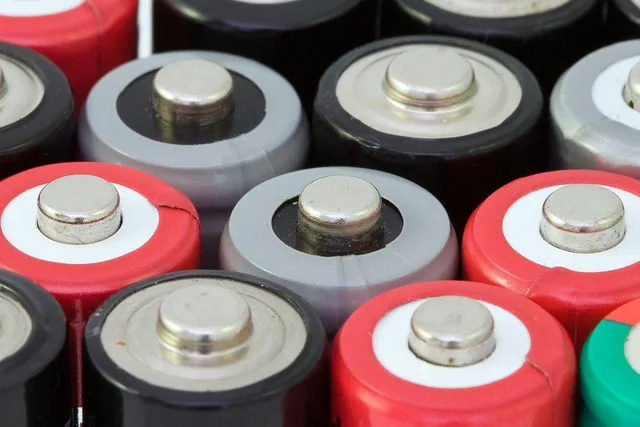
Batteries. Capacity, continuous power and warranty terms decide most home battery purchases. Tesla's Powerwall 3 lists 13.5 kWh of usable capacity and 11.5 kW of continuous output, backed by a 10-year warranty. Enphase's IQ Battery 5P lists 5 kWh usable per unit and 3.84 kW continuous.
FranklinWH's aPower lists 13.6 kWh and 5 kW continuous. Generac's PWRcell scales from about 9 kWh to 18 kWh using 3 kWh modules. sonnen's sonnenCore lists 10 kWh and 4.8 kW continuous. Stacking two units doubles capacity and backup scope.
Installed battery cost typically runs $1,000 to $1,500 per kWh as of 2026, so a single 10 to 14 kWh unit commonly lands between $10,000 and $20,000 before incentives. AC-coupled installs, a critical-load panel and permit work drive the range.
Electrical infrastructure. Load management devices come from Span and Emporia. Circuit-level monitors include the Sense Home Energy Monitor. Span's smart panel supports circuit-level control and backup. Emporia's monitor tracks whole-home and branch-circuit loads. Sense reads whole-home load and can identify some appliance signatures.
Choosing between groups is a house question. Choosing within a group is a specification question. Most buyers reverse that order.
Read the ratings for what they are
Efficiency ratings come from standardized laboratory procedures. That is what makes them comparable, and what limits them: your house is not the test rig. A cold-climate unit rated at milder conditions than your January will not behave the way the label suggests.
Battery and module ratings need the same caution. Most lithium iron phosphate home batteries list round-trip efficiency between 85% and 90%. Module warranties promise a percentage of original output after 25 or 40 years, not a fixed wattage.
Ratings Are Lab Results
Your house is not the test rig
Cold-climate rating at milder conditions misleads
Cost-effectiveness depends on several factors at once
A label marks a threshold, not a ranking
EIA analysis of appliance purchasing makes the point plainly, noting that choosing the most cost-effective option depends on several factors at once, not on the efficiency figure alone. Purchase price, expected lifetime, local energy prices and run hours all move the answer, and they move it differently for different households.
Certification labels deserve the same care. EIA's look at how unevenly ENERGY STAR equipment is adopted across appliance types shows a label marks a threshold, not a ranking. Two certified units are not equivalent.
A comparison sheet that works
Build one table and fill it for every candidate in the same category.
| Column | Why it is there |
|---|---|
| Capacity at your design temperature | Not nameplate capacity at mild conditions |
| Rated efficiency and the test standard used | Comparability depends on a shared basis |
| Electrical requirement | Voltage, circuit rating, breaker type |
| Physical fit | Clearances, drain, ceiling height, doorway |
| Sound level | Matters most for bedroom-adjacent outdoor units |
| Warranty terms and what voids them | Often registration and annual service |
| Degradation or retained capacity | Module output after 25 years, battery kWh at warranty end |
| Inverter, gateway or monitoring type | Panel-level data, app support, offline behavior |
| Backup scope | Whole home, critical loads only, or none |
| Typical installed cost range | Varies by category, efficiency tier and local labor |
| Local parts and service availability | The most common cause of long outages |
The last row decides more real-world satisfaction than any efficiency figure. A mid-range unit a local technician can service next week usually beats a highly rated unit whose parts ship from three states away.
Where to put your effort
Sizing beats selection. An oversized system short-cycles, controls humidity poorly and wears faster. An undersized one leans on backup heat.
Both outcomes come from a skipped load calculation, not from the model on the invoice.
A 200-amp service upgrade or a new feeder is a panel capacity question for a licensed electrician, and the Canadian Electrical Code or the NEC as adopted locally sets the answer.
Installation quality beats both. Duct leakage, refrigerant charge, airflow setup and controls configuration are all site work, and each can undo a good product.
For the heating category, our piece on system value, upkeep and fit goes further into those trade-offs. The electrification starting guide covers where product selection sits in the wider sequence.
Common questions
Which brand is best?
There is no single answer, and no test data behind a ranking. Compare specifications, warranty terms and local service availability, then let your own load calculation decide.
Is a higher efficiency rating always worth the extra cost?
Not automatically. It depends on your energy prices, run hours and how long you expect to keep the equipment. Run the arithmetic with your own figures rather than the showroom's.
Do I need a certified product to qualify for incentives?
Often yes, but requirements vary by program and change year to year. Confirm current eligibility with your utility or program administrator before you buy, since rules differ by province and state.
How much does installation quality really matter?
Enough that a correctly installed average unit routinely outperforms a poorly installed premium one. Ask for certified installer credentials and confirm the work on site before final payment.
Do I need a battery to add solar panels?
No. Panels work on their own, and a battery adds backup and time shifting. Cost, outage frequency and local utility rules decide whether it earns its place.